
Retarder Prover in Brisbane

Join industrial buyers comparing supplier quotes and buying with confidence. Free, quick and easy.
How IndustrySearch works
Tell us what you need
Answer a few quick questions about the equipment you're looking for.
Get personalised quotes
Receive tailored quotes from relevant Australian suppliers.
Compare and choose
Compare quotes, ask questions and choose the best option for you.
 Save time
 Compare quotes
 Buy with confidence
Save time, compare quotes & buy with confidence
Retarder Prover Suppliers in Brisbane

Inomach is an Retarder Prover supplier to Brisbane
INOMACH is a growing Australian production and trade company based in Brisbane, Australia. INOMACH designs, distributes, manufactures and services dough processing & handling machines, production lines, bakery ovens, packaging machines, trays & trolleys, silo systems and auxiliary units. As an Australian company, our first priority is customer satisfaction. With our quality ...

Baketec Solutions is an Retarder Prover supplier to All
We do not just sell equipment, we provide end-to-end solutions from concept design through to ongoing after-sales support. We want our customers to know that we have the knowledge to help them find the best solution for their business and we have the engineering skills to service them all the way through. We are not looking for a quick sale, we are looking to build long-term ...

Brook Food & Bakery Equipment is an Retarder Prover supplier to All
Here at Brook Food we are passionate about the Bakery industry; we pride ourselves on that passion and believe we pass on this enthusiasm to our customers when working with them on equipment solutions for their businesses. Since 2012 we have been at the forefront of equipment supply in Australia. We offer new machinery from some of the leading worldwide manufacturers. Based ...
Brook Provers and Retarder Provers | Brook Food & Bakery Equipment

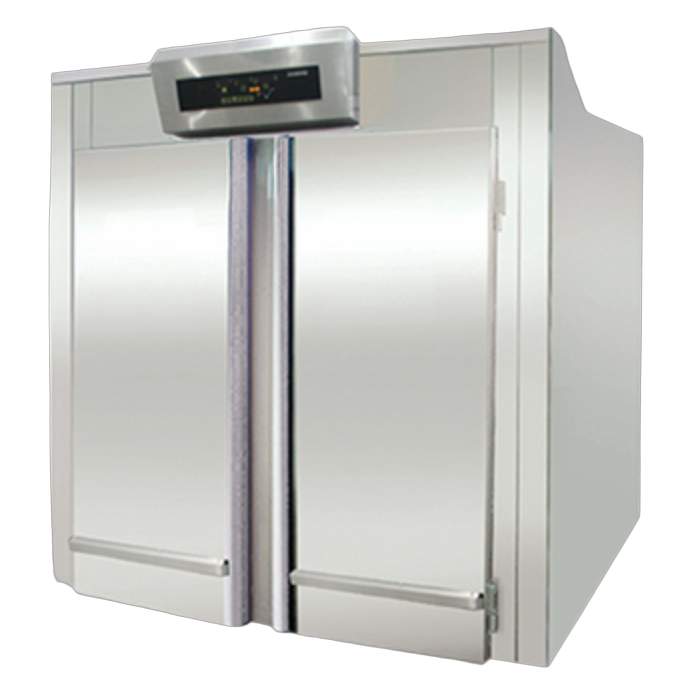
Irtech Retarder Prover 12 RACK CAPACITY

- Increased flexibility: With a Retarder Prover, a baker can prepare dough in advance and store it in the machine to control the proofing process. This allows the baker to adjust the baking schedule according to demand, resulting in fresher products and reduced waste.
- Improved flavor and texture: The controlled temperature and humidity conditions of a Retarder Prover allow for a slower, more gradual fermentation process. This results in improved flavor and texture of the finished product, with a softer crumb and a more complex flavor profile.
- Consistency: A Retarder Prover provides consistent proofing conditions, minimizing the variables that can affect the quality of the final product. This means that every batch of dough will have the same texture, flavor, and appearance, ensuring customer satisfaction and brand consistency.
- Time-saving: A Retarder Prover allows for a longer fermentation process without requiring the baker to be present, freeing up time for other tasks. This can be especially beneficial for small bakeries or those with limited staff.
- The size of the Retarder Prover you should buy depends on the size of your bakery and the volume of dough you need to store. Small bakeries may only need a Retarder Prover with a capacity of 10-20 trays, while larger bakeries may require a unit that can hold up to 100 or more trays.
- Size and Capacity: The Retarder Prover should be large enough to accommodate the bakery's production needs. Choose a size that can hold enough dough to meet your daily production requirements.
- Temperature and Humidity Control: The Retarder Prover should be capable of maintaining the right temperature and humidity levels to ensure optimal fermentation.
- Programmable Controls: Choose a model with programmable controls that allow you to set the temperature, humidity, and proofing time.
- Ease of Use: The Retarder Prover should be easy to operate and maintain. Look for a model that is user-friendly and comes with easy-to-follow instructions.
- Energy Efficiency: Choose an energy-efficient model that will help keep energy costs low while still delivering optimal results.
- Durability: The Retarder Prover should be made from durable materials and built to last. Look for a model made from high-quality materials that can withstand the rigors of daily use.
- Safety Features: Look for a model with safety features such as automatic shut-off and overheat protection to prevent accidents and ensure user safety.
- Regular cleaning: The Retarder Prover should be cleaned regularly to prevent the buildup of flour, dough, and other debris. Use warm soapy water and a soft cloth to wipe down the interior and exterior of the machine. Avoid using abrasive cleaners or scouring pads that can damage the surface.
- Temperature calibration: The temperature inside the Retarder Prover should be calibrated regularly to ensure it is maintaining the correct temperature range. Use a calibrated thermometer to check the temperature in different areas of the machine and adjust as necessary.
- Door gasket inspection: The door gasket on the Retarder Prover should be inspected regularly for wear and tear. If there are any cracks or signs of damage, the gasket should be replaced to prevent air leaks and maintain the desired temperature.
- Fan maintenance: The Retarder Prover has a fan that circulates the air inside the machine. It is important to clean the fan blades and motor regularly to prevent the buildup of dust and debris that can affect the fan's performance.
- Electrical inspection: Finally, the electrical components of the Retarder Prover should be inspected regularly to ensure they are functioning properly. Any damaged or worn-out components should be replaced immediately by a qualified technician.
- First, it is important to ensure that the Retarder Prover is properly maintained and cleaned regularly to prevent the growth of harmful bacteria. This includes cleaning the surfaces, trays, and racks with a food-safe sanitizing solution.
- Second, it is important to follow the manufacturer's instructions for use and to never overload the Retarder Prover. Overloading can cause uneven cooling and heating, which can lead to food spoilage and potential health hazards.
- Third, it is important to ensure that the Retarder Prover is properly ventilated and that the temperature is monitored regularly to prevent the risk of fire or overheating.
- Lastly, it is important to ensure that all employees who operate the Retarder Prover are properly trained on its use and safety protocols. This includes understanding how to properly load and unload the equipment, as well as how to monitor and maintain the temperature and overall safety of the unit.
Retarder Prover Costs and Supplier Insights
Why choose a supplier in Brisbane for Retarder Prover Quotes?
If you are in Brisbane and considering purchasing a Retarder Prover, it's worth considering Brisbane-based suppliers. Doing so offers several benefits that are particularly relevant to businesses in the area. Here are the top reasons why opting for a local Brisbane supplier can be the best decision for your Retarder Prover buying needs.
Eco-Friendly Retarder Prover SolutionsReduce your carbon footprint by choosing eco-friendly Retarder Prover solutions. Local sourcing cuts down on transport emissions and supports sustainable practices.
Custom Solutions from Brisbane SuppliersGet Retarder Prover solutions that meet your exact needs from local suppliers. Tailor-made products ensure maximum efficiency and satisfaction.
Dependability of Brisbane Retarder Prover ProductsAssure quality and dependability when you buy a Retarder Prover. Local suppliers maintain rigorous quality control to meet your expectations.
After-Sales Support for Retarder Prover in BrisbaneAccess dependable after-sales support for your Retarder Prover with Brisbane suppliers. Local service means faster response times and more personal care.
Continuous Learning with Brisbane SuppliersPromote continuous learning for your Retarder Prover with ongoing training and updates from Brisbane suppliers. Stay ahead with the latest operational knowledge.
Secure Your Inventory with Local SuppliersSecure your Retarder Prover inventory by partnering with local suppliers in Brisbane. Reduce the likelihood of stock shortages and logistical issues.
Buy a Retarder Prover Near Me

 Reach valuable industrial buyers in minutes
 Promote key products & content
 Drive cost effective & measurable sales