
Signal Conditioner in Brisbane

Join industrial buyers comparing supplier quotes and buying with confidence. Free, quick and easy.









How IndustrySearch works
Tell us what you need
Answer a few quick questions about the equipment you're looking for.
Get personalised quotes
Receive tailored quotes from relevant Australian suppliers.
Compare and choose
Compare quotes, ask questions and choose the best option for you.
 Save time
 Compare quotes
 Buy with confidence
Save time, compare quotes & buy with confidence
Signal Conditioner & Signal Conditioning Suppliers in Brisbane
Quality in Control P/L is an Signal Conditioner supplier to Brisbane
Quality In Control is an Australian supplier of leading quality control and process technology pre-dominantly for the following industries: - Plastic & Rubber extrusion - Automotive & Metal forming - Profile extrusion - Can making & filling - Cable & Pipe extrusion - Steel Wire, Rod & Bar Mills - CNC cutting industry - Mining industry - Timber millsCustomers: Liberty OneSteel , BHP, Mitsubishi, Visi-Pak
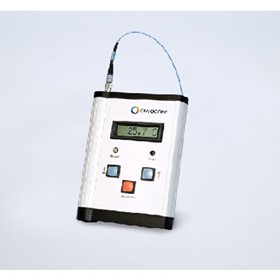
Fiber Optic Signal Conditioner | FOTEMP1-H OEM
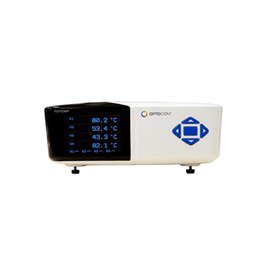
Compact Bench Top Signal Conditioner For Lab and Factory | FOTEMP
ESIS is an Signal Conditioner supplier to All
Esis is an expert industrial electronic equipment supplier, based in Sydney, Australia since 1971. Need to spec or purchase industrial technology? Our engineers give you expert advice to find the best solution for your requirements. We have a deep knowledge across a huge range of products well and we're familiar with diverse industry applications. After purchase you can ...Customers: NBN Co, ASC, Saab, Wormald, Datacom, Powerlink, Source Energy, Dept of Defence, L&H, MMEM
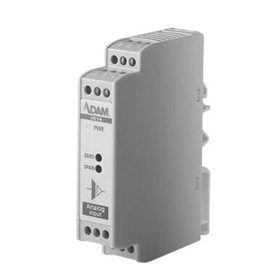

Kelba is an Signal Conditioner supplier to All
KELBA is a 100% Australian owned and operated company, building and supplying quality load cells, mounting accessories and weighing equipment for use in industry both in Australia and Internationally. Our components are used under tanks, silo’s, mining applications, conveyors, weighbridges and most engineering applications, where proven weighing reliability and accuracy is ...


- Amplifiers: These are used to amplify the signal strength, and they come in different types, such as voltage, current, and power amplifiers.
- Filters: These are used to remove unwanted signals or noise from the input signal. They come in different types, such as low-pass, high-pass, band-pass, and notch filters.
- Isolators: These are used to isolate the input signal from the output signal, to prevent any interference or noise.
- Converters: These are used to convert one type of signal to another. For example, an analog-to-digital converter (ADC) is used to convert an analog signal to a digital signal.
- Transmitters: These are used to convert an electrical signal into a signal that can be transmitted over a distance. For example, a current loop transmitter converts an electrical signal into a current signal that can be transmitted over a long distance.
- Signal conditioners for specific applications: There are also signal conditioners available for specific applications, such as temperature, pressure, and vibration signal conditioners.
- Input type: The signal conditioner should be compatible with the type of input signal you are working with, such as voltage, current, temperature, pressure, or strain.
- Accuracy: The signal conditioner should provide accurate and reliable measurements of the input signal, with minimal noise or distortion.
- Range: The signal conditioner should have a wide enough input range to accommodate the full range of the input signal, while also providing the necessary resolution and sensitivity.
- Filtering: The signal conditioner should have filtering capabilities to remove unwanted noise or interference from the input signal.
- Output type: The signal conditioner should provide the appropriate output type for your application, such as voltage, current, or digital signals.
- Power supply: The signal conditioner should have a reliable and stable power supply, with options for AC or DC power.
- Mounting and installation: The signal conditioner should be easy to install and mount, with options for DIN rail or panel mounting.
- Durability and reliability: The signal conditioner should be built to withstand harsh environments and provide long-term reliability, with features like rugged enclosures and protective coatings.
- The reliability of signal conditioners largely depends on the quality of their design, construction, and components. High-quality signal conditioners that are built with durable materials and reliable components can last for many years without any issues.
- The lifespan of a signal conditioner also depends on how it is used and maintained. Signal conditioners that are used in harsh environments or exposed to extreme temperatures, moisture, or vibrations may have a shorter lifespan than those used in controlled environments. Regular maintenance and calibration can also help prolong the lifespan of a signal conditioner and ensure optimal performance.
- Install the signal conditioner: The installation process may involve mounting the signal conditioner on a DIN rail or a panel, connecting wires to the input and output terminals, and powering it up. It is crucial to follow the manufacturer's instructions carefully to avoid damaging the signal conditioner or other equipment.
- Configure the signal conditioner: Once the signal conditioner is installed, you may need to configure it to match your specific application's needs. This may involve setting the gain, offset, filter, or other parameters using dip switches, potentiometers, or software.
- Test the signal conditioner: After installation and configuration, you should test the signal conditioner to ensure it is working correctly. You can use a signal generator or a sensor simulator to generate a known signal input and observe the output signal's quality and stability.
- Calibrate the signal conditioner: Finally, you may need to calibrate the signal conditioner periodically to maintain its accuracy and reliability. This may involve adjusting the gain or offset using a calibration source or a reference signal.
Signal Conditioner Costs and Supplier Insights
If you are looking to buy a Signal Conditioner for sale, suppliers on IndustrySearch include Quality in Control P/L, ESIS
Why choose a supplier in Brisbane for Signal Conditioner Quotes?
If you are in Brisbane and considering purchasing a Signal Conditioner, it's worth considering Brisbane-based suppliers. Doing so offers several benefits that are particularly relevant to businesses in the area. Here are the top reasons why opting for a local Brisbane supplier can be the best decision for your Signal Conditioner buying needs.
Superior Standards with Brisbane ExpertiseBenefit from superior Signal Conditioner standards provided by Brisbane suppliers. Their expertise ensures products are built to last and perform exceptionally.
Budget with Local Signal Conditioner SuppliersStreamline your budget by choosing local Signal Conditioner suppliers. Efficient logistics and reduced overheads lead to cost-effective purchasing.
Custom Solutions from Brisbane SuppliersGet Signal Conditioner solutions that meet your exact needs from local suppliers. Tailor-made products ensure maximum efficiency and satisfaction.
Reliable Signal Conditioner Supply from BrisbaneEnsure a reliable Signal Conditioner supply from Brisbane. Local suppliers provide consistent, dependable delivery schedules.
Fast-Track Your Signal Conditioner NeedsFast-track your business needs with quick Signal Conditioner sourcing from Brisbane. Reduce the wait and get what you need, when you need it.
Continuous Support for Your Signal ConditionerGet continuous support for your Signal Conditioner needs from Brisbane's local suppliers. Ongoing help ensures your equipment performs at its best.
Buy a Signal Conditioner Near Me

 Reach valuable industrial buyers in minutes
 Promote key products & content
 Drive cost effective & measurable sales