
Let us get you 3 quotes
Compare and select the best Signal Generator
Compare Quotes

Find the right
Signal Generator in Brisbane
Signal Generator in Brisbane
Join industrial buyers comparing supplier quotes and buying with confidence. Free, quick and easy.

How IndustrySearch works
Tell us what you need
Answer a few quick questions about the equipment you're looking for.
Get personalised quotes
Receive tailored quotes from relevant Australian suppliers.
Compare and choose
Compare quotes, ask questions and choose the best option for you.
Looking to buy the best Signal Generator for sale in Brisbane? Get Quotes sends your requirements to expert suppliers in Australia so you get personalised quotes to compare Signal Generator prices, specifications, features and terms then choose the one that’s right for you. Also compare servicing, consumables and reviews, so you can buy with confidence.
 Save time
 Compare quotes
 Buy with confidence
Save time, compare quotes & buy with confidence
Signal Generator Suppliers in Brisbane
Updated Jan 08, 2024
Supplier Location
Brand
Filter by brand:
Filter by location:

Metromatics | Computing, Technology and Embedded solutions
Customers: Raytheon Australia, BAE Systems, Boeing Australia, QR, Transgrid, Snowy Hydro, SAAB, ASC
Metromatics is an Signal Generator supplier to All
Metromatics Pty Ltd is an Australian-owned engineering and technology company specialising in the design, manufacture, integration and supply of rugged computing, embedded electronics and industrial technology solutions for demanding applications across Australia and New Zealand. Established in 1989, Metromatics provides engineering expertise and complete technology solutions ...Customers: Raytheon Australia, BAE Systems, Boeing Australia, QR, Transgrid, Snowy Hydro, SAAB, ASC
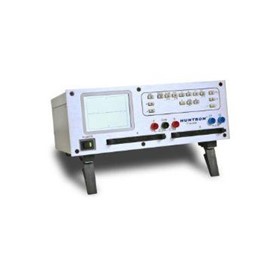
Huntron PCB Fault Finding Tool Tracker 3200S
The Huntron Tracker 3200S is a test and troubleshooting solution for PCB Circuit Boards. It allows power off testing of the electronic circuit. ...

EON Instrumentation Timecode Generator Portable IRIG B 6155E
The 6155E is a battery powered, portable, GPS synchronized IRIG UTC timecode generator. It has a RS-232 port for easy setup and to output time ...

EON Instrumentation Timecode Generator Miniature MIL STD IRIG B 6115G-8S
The 6115G-8AD is a MIL-STD qualified miniature IRIG B Timecode Generator with a 12 channel GPS receiver and event trigger input. It generates ...

Signal Generator
Signal Generator
What is a signal generator and what are its uses?
A signal generator is an electronic device that produces various types of electrical waveforms, such as sine, square, triangle, and sawtooth waves. It is used in various applications such as testing and troubleshooting electronic devices, calibrating instruments, and designing and testing electronic circuits. Signal generators are also used in audio and video production, telecommunications, and research and development. They can generate signals with precise frequency, amplitude, and modulation, and can be controlled through software or manually.
What are the different types of signal generators available in the market?
There are several types of signal generators available in the market, including:
- Function generators: These generators produce waveforms such as sine, square, and triangle waves.
- Arbitrary waveform generators: These generators allow users to create custom waveforms that can be used for specific applications.
- RF signal generators: These generators produce radio frequency signals that are used in wireless communication systems.
- Pulse generators: These generators produce pulses of varying widths and frequencies.
- Audio generators: These generators produce audio signals that are used in audio testing and measurement.
- Video generators: These generators produce video signals that are used in video testing and measurement.
- Sweep generators: These generators produce signals that sweep across a range of frequencies.
- Noise generators: These generators produce random noise signals that are used in testing and measurement applications.
What are the key features to consider when buying a signal generator?
When buying a signal generator, there are several key features to consider, including:
- Frequency range: The frequency range of the signal generator should match the frequency range of the device or system being tested.
- Output power: The output power of the signal generator should be sufficient to drive the device or system being tested.
- Waveform generation: The signal generator should be able to generate the required waveform, such as sine, square, triangle, or pulse.
- Modulation capabilities: The signal generator should have the ability to modulate the signal, such as amplitude modulation (AM), frequency modulation (FM), or phase modulation (PM).
- Accuracy and stability: The signal generator should have high accuracy and stability to ensure reliable and repeatable measurements.
- Noise and distortion: The signal generator should have low noise and distortion to ensure accurate measurements.
- Interface and control: The signal generator should have an easy-to-use interface and control system, such as a touch screen or computer software.
What is the frequency range of the signal generator and how does it affect my application?
The frequency range of a signal generator refers to the range of frequencies that it can produce. This range can vary depending on the specific model and can range from a few Hertz to several GHz. The frequency range is important because it determines the types of applications that the signal generator can be used for. For example, if you need to generate signals for audio applications, a signal generator with a frequency range of a few Hertz to a few kHz would be sufficient. However, if you need to generate signals for radio or wireless communication applications, a signal generator with a frequency range of several GHz would be necessary. In general, the higher the frequency range of the signal generator, the more versatile it is and the more applications it can be used for.
What is the output power of the signal generator and how does it affect my application?
The output power of a signal generator refers to the strength of the signal it produces. This power can range from a few milliwatts to several watts, depending on the specific model and application. The output power can affect the performance of the device or system being tested or operated. For example, if the power is too low, the signal may not be strong enough to properly drive the device or system. On the other hand, if the power is too high, it may damage the device or system or cause interference with other nearby equipment. Therefore, it is important to choose a signal generator with an appropriate output power for the specific application.
What are the different modulation types supported by the signal generator?
However, in general, signal generators can support various modulation types such as amplitude modulation (AM), frequency modulation (FM), phase modulation (PM), pulse modulation (PWM), and quadrature amplitude modulation (QAM). Some signal generators may also support more advanced modulation types such as vector signal modulation (VSM) and orthogonal frequency-division multiplexing (OFDM).
What is the accuracy and stability of the signal generator?
However, the accuracy and stability of a signal generator depend on various factors such as the quality of components used, the calibration process, and the environmental conditions in which it is used. Generally, a high-quality signal generator will have a high level of accuracy and stability, with minimal drift over time. Calibration and regular maintenance can also help to ensure consistent performance.
What is the price range of signal generators in Australia?
However, based on online research, the price range of signal generators in Australia varies depending on the type, features, and brand. Basic signal generators can cost around $100 to $500, while more advanced models can cost up to $10,000 or more. It is recommended to compare prices and features from different suppliers before making a purchase.
What are the top brands of signal generators available in Australia?
However, some of the top brands of signal generators available in Australia include Keysight Technologies, Rohde & Schwarz, Tektronix, Anritsu, and National Instruments. These brands offer a range of signal generators with different specifications and features to meet the needs of various industries and applications. It is recommended to research and compare the specifications and prices of each brand before making a purchase decision.
What are the warranty and after-sales support options available for signal generators in Australia?
The warranty and after-sales support options for signal generators in Australia vary depending on the manufacturer and seller. Some manufacturers offer a standard warranty of one year, while others offer extended warranties for an additional fee. After-sales support options may include technical support, repair services, and replacement parts. Some sellers may also offer additional services such as calibration and training. It is important to research the warranty and after-sales support options before purchasing a signal generator to ensure that you are getting the best value for your investment.
Get 3+ Quotes Now - Compare prices, availability and quality. It’s free, quick and secure.
Back to top
Signal Generator Costs and Supplier Insights
The listed price of a Signal Generator for sale ranges from $500 to $5,000, averaging $2,750.
If you are looking to buy a Signal Generator for sale, suppliers on IndustrySearch include Metromatics
Use Get Quotes to receive personalised prices and proposals from trusted suppliers with top reviews and excellent service.
Buy a Signal Generator Near Me
Save time and delivery costs while getting fast support, by contacting Signal Generator suppliers near you.

Are you a Signal Generator supplier?
 Reach valuable industrial buyers in minutes
 Promote key products & content
 Drive cost effective & measurable sales
learn more
Reach valuable industrial buyers in minutes
Promote key products & content
Drive cost effective & measurable sales