
Automatic Strapping Machine

Join industrial buyers comparing supplier quotes and buying with confidence. Free, quick and easy.




How IndustrySearch works
Tell us what you need
Answer a few quick questions about the equipment you're looking for.
Get personalised quotes
Receive tailored quotes from relevant Australian suppliers.
Compare and choose
Compare quotes, ask questions and choose the best option for you.
 Save time
 Compare quotes
 Buy with confidence
Save time, compare quotes & buy with confidence
Automatic Strapping Machine Suppliers
Streamline Your Packaging with Automatic Strapping Machines
Unlock Efficiency with Automatic Strapping Machines
In today's fast-paced production environment, efficiency and reliability in packaging are paramount. Automatic strapping machines offer a cost-effective solution to meet the high demands of various industries. By integrating these machines into your packaging line, you ensure a fast, efficient, and uniform strapping process.
What is an Automatic Strapping Machine?
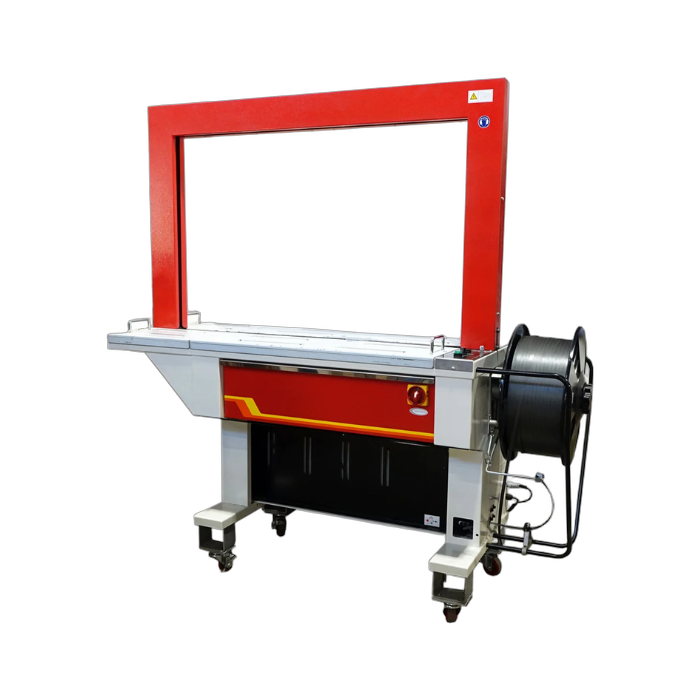
An automatic strapping machine is a piece of equipment designed to automatically apply a strap to a product or pallet, securing it for transport or storage. Unlike manual strapping methods, these strapping machines provide consistent adjustable tension, ensuring stability without damaging the goods.
It doesn’t matter what you send or how you send it, what it looks like when it arrives matters most. It’s all about first impressions.
It’s about professionalism and how a company represents the products they market and send to customers. It’s about expectations. If products arrive in crumpled or otherwise shoddy packaging, new clients may not buy again and existing clients may think twice.
Whether you’re supplying a commercial enterprise or a private individual, the Digital Age is a highly critical age where satisfaction with what they order can be drastically affected by how it arrives.
As a result, packaging is now almost as competitive as products. This is why automatic box strapping machines are now an integral part of manufacturing and product distribution. Whether handheld or fully automated, box strapping machines help businesses deliver professionally packaged and well-protected goods throughout Australia and the world. Box strapping machines are designed for strapping boxes of goods to strengthen and secure them for safe delivery.

Packline Solutions is a resourceful company that manufactures and supplies high quality packaging solutions such as strapping, stretch wrapping, carton sealing and heat sealing solutions through distributors to customers all over Australia and New Zealand. Packline Solutions is strategically positioned to meet packaging demands and combines operational efficiency with experience ...

Advanced Strapping Machine - Pacmasta - AFS-900

Automatic Strapping Machine - Pacmasta - TRS-600

Westside Packaging Systems Australia is a leading packaging company in Melbourne known for supplying a range of Steel Strapping, Plastic Strapping and Stretch Wrap films to suit all types of industries and applications. Our products and services include: Steel Strapping – We provide various options of steel strapping to bind your item, including standard ribbon and rope wound ...


Pro-Pac Packaging was established in 1987 and over the years has become a leader in the manufacture and supply of flowable and non-flowable voidfill protective packaging. Pro-Pac Packaging has also become one of the leading distributors of all industrial packaging needs including stretch wrap, strapping, polybags, tape, cartons, protective and safey gear, food handling products ...


Lewis Australia has been producing high quality automation equipment worldwide since 1968. Variety of automation solutions including high volume turnkey production systems in the automotive and manufacturing industries to highly specialised equipment for the metals and mining industries. Lewis Australia is able to provide a full range of engineering services including ...

Contract Packaging Systems Pty Ltd (CPS) is a SW2_bigprivately owned company founded and formerly owned by, Chris Bishop, in 1985. Previously known as Cling Packaging Systems, the company was formed as a result of the ever increasing needs of Australian and New Zealand manufacturers for high quality, reliable packaging equipment backed by an efficient after sales support ...


We believe it should be easy and affordable to source your packaging machinery and equipment requirements. Our products are suited across a range of industries and business size, from small businesses needing basic packaging equipment through to large warehousing environments. You should never have to worry if the machinery and equipment you need will be ready and available ...


Emjay provides a range of product and service solutions for packaging consumables, packaging machinery, silicones, sealants, and adhesives plus a whole lot more, we are the “one stop shop.” Our product catalogue has been compiled to give you a comprehensive overview of the products and services we offer to a broad range of customers and markets. Emjay is an Australian family ...


FROMM Australia started as Australian Warehouse Solutions in 1977 and has been a subsidiary of the global FROMM Group since 2010. FROMM is a Swiss family business with 75 years of experience in providing quality packaging solutions. It operates in over 50 countries, through 30 subsidiaries and a large network of sales partners. FROMM believes in logical vertical integration ...


Strap + Wrap specialise in designing flexible and customised applications, in which equipment, consumables and technical back up service work together as a whole. Due to our systems approach we can design superior solutions for the most complex problems at greater efficiency and lower cost. Strap + Wrap have the experience, knowledge and solutions for your specific industry ...

Automatic Strapping Machine Strap 5 – 6 mm | OR-M 565

Automatic Strapping Machine Strap 9 – 12 mm | OR-M 510
Automatic Strapping Machine Buying Guide
The Advantages of Automatic Strapping Machines
Considering the Automatic Strapping Machine Price
While evaluating an automatic strapping machine price, it's essential to consider the long-term benefits it brings. A higher initial investment in a reliable machine can lead to greater savings in terms of reduced labor costs and material waste over time.
Finding the Right Strapping Machine for Your Needs
With a variety of automatic strapping machines available in the market, it’s important to choose one that aligns with your operational needs. Look for machines that offer electronic tension control, a dependable power supply, and the ability to adjust to different strap sizes for a truly efficient strapping solution.
Automatic Strapping: A Smart Investment
Investing in an automatic strapping machine can revolutionize your packaging process, enhancing your company's overall productivity. By comparing different models and prices, you can find a machine that not only meets your strapping needs but also offers the best value for money.
- Time-Saving: They eliminate the need for manual strapping, allowing your workforce to focus on other tasks.
- Uniform Application: Electronic tension control ensures that each strap is applied with the same tension, providing uniform security for every package.
- Versatility: These machines can handle a range of strap sizes and types, making them suitable for different packaging requirements.

- Fully automatic strapping machines - These machines are designed to automatically feed, tension, seal and cut the strapping without any human intervention.
- Semi-automatic strapping machines - These machines require an operator to manually feed the strapping through the machine and then activate the strapping process.
- Pallet strapping machines - These machines are specifically designed for strapping pallets and can handle larger and heavier loads.
- Side-seal strapping machines - These machines use a side-seal method to seal the strapping, which is ideal for irregularly shaped products.
- Tabletop strapping machines - These machines are smaller in size and are designed to be placed on a tabletop for strapping small packages.
- Portable strapping machines - These machines are lightweight and can be moved around easily, making them ideal for use in different locations.
Strength Comparison: In general, polyester strapping is stronger than polypropylene strapping.
Polypropylene Strapping: Polypropylene strapping, also known as poly strapping, is a lightweight and flexible option commonly used for light to moderate-duty applications. While polypropylene strapping offers good tensile strength for its weight, it is not as strong as polyester strapping.
Polyester Strapping: Polyester strapping, made from polyester fibers, is known for its exceptional strength and durability. It has a higher tensile strength compared to polypropylene strapping, making it suitable for heavier loads and more demanding packaging applications.
Application Considerations: The choice between polypropylene and polyester strapping depends on factors such as the weight and nature of the load, transportation conditions, and budget constraints. Polyester strapping is often preferred for heavy-duty applications or where extra strength and security are required, while polypropylene strapping may be suitable for lighter loads or cost-sensitive applications.
Cost vs. Performance: While polyester strapping may offer superior strength, it is typically more expensive than polypropylene strapping. Therefore, users should consider the trade-off between cost and performance when selecting the appropriate strapping material for their specific needs.
Environmental Factors: Additionally, polyester strapping may offer better resistance to ultraviolet (UV) rays and moisture compared to polypropylene strapping, making it suitable for outdoor or long-term storage applications.
By understanding the relative strengths of polypropylene and polyester strapping, users can make informed decisions when choosing the most suitable strapping material for their packaging requirements.
Please note that while polyester strapping is generally stronger than polypropylene strapping, specific performance characteristics may vary depending on factors such as manufacturer specifications and application requirements.
Feeding: A fully automatic strapping machine is loaded with a coil of strapping material, either plastic or metal, which is fed into the machine through a feeding mechanism.
Tensioning: The item or package to be strapped is placed on the machine's strapping table. The machine automatically wraps the strapping material around the item, applying tension to ensure a secure hold.
Sealing: Once the strapping material is wrapped around the item, it passes through a sealing mechanism. For plastic strapping, this often involves heat-sealing the ends of the strap together. Metal strapping may be sealed using friction welding or other methods.
Cutting: After sealing, any excess strapping material is automatically cut to the desired length. This ensures that the strap is securely attached to the item without any loose ends.
Ejection: Once the strapping is applied and secured, the item is ejected from the machine, ready for further processing or shipment.
Control Panel: Many fully automatic strapping machines feature a control panel where operators can adjust settings such as tension, sealing temperature, and strapping cycle speed. Fully automatic strapping machines streamline the packaging process by automating the strapping operation, increasing efficiency, and ensuring consistent and secure strapping of items. They are commonly used in industries such as manufacturing, distribution, logistics, and warehousing to package a wide range of products for shipping and storage.
Plastic Straps: Packaging straps are commonly made of plastic materials such as Polyethylene Terephthalate (PET) or Polypropylene (PP). PET plastic straps are durable and suitable for medium to heavy-duty loads, while PP plastic straps are lightweight and flexible, ideal for securing lighter loads or applications requiring flexibility.
Metal Straps: Packaging straps can also be made of metal, typically steel or stainless steel. Steel straps are strong and durable, suitable for heavy-duty applications and securing heavy loads. Stainless steel straps offer enhanced corrosion resistance and durability, making them ideal for harsh environments.
Variety of Options: Both plastic and metal straps are available in various widths, thicknesses, and configurations to accommodate different load sizes and packaging requirements. The choice of material depends on factors such as load weight, application, environmental conditions, and cost considerations.
Application: Packaging straps play a crucial role in securing and stabilizing loads during transportation and storage, helping to prevent shifting, damage, and loss of goods. Selecting the appropriate type of strap for each application ensures efficient and effective packaging solutions.
In summary, packaging straps are commonly made of plastic materials such as PET or PP, as well as metal materials like steel or stainless steel. Each material offers unique properties and benefits, allowing businesses to choose the most suitable option for their specific packaging needs.
- Efficiency: An automatic strapping machine can strap packages much faster than a manual strapping tool. This can significantly increase productivity and save time.
- Consistency: An automatic strapping machine applies the same amount of tension and pressure every time, resulting in consistent strapping quality. This can reduce the risk of damage to the product or package.
- Safety: An automatic strapping machine eliminates the need for manual labor, which can reduce the risk of repetitive strain injuries or accidents.
- Cost savings: Over time, an automatic strapping machine can save money by reducing labor costs and increasing productivity.
- Customizability: Automatic strapping machines can be customized to fit specific packaging needs, such as strapping size or type.
- When selecting an automatic strapping machine, it is essential to consider the speed and efficiency of the machine. Look for a machine that can handle large volumes of products without compromising on quality. You should also consider the flexibility of the machine in terms of adjusting to different product sizes, widths, and thicknesses.
- Another factor to consider is the level of automation required. Some automatic strapping machines are fully automated, while others may require some manual intervention. Depending on your production needs, you may need a machine that can operate without constant supervision.
- Finally, it is essential to consider the cost of the machine, including installation and maintenance costs. Look for a machine that offers a good balance between cost and performance, and that provides reliable, long-term operation.
- Speed: The speed of the machine is an important factor as it will determine how many packages can be strapped per minute.
- Strap Tension: The tension of the strap is important to ensure that the package is securely strapped without damaging the product.
- Strap Width: The width of the strap is important as it will determine how much weight the strap can support.
- Conveyor Height: The height of the conveyor is important to ensure that the machine is suitable for the products being strapped.
- Automatic Feed: An automatic feed system is important as it will ensure that the strapping material is fed into the machine without the need for manual intervention.
- User Interface: A user-friendly interface is important to ensure that the machine is easy to operate and can be programmed for different strapping requirements.
- Maintenance: The machine should be easy to maintain and have a low maintenance requirement to reduce downtime.
- Clean the machine regularly: Use a soft cloth or brush to clean off any dust, debris, or dirt that may have accumulated on the machine. You can also use a mild cleaning solution or compressed air to clean the machine.
- Lubricate the machine: Use a lubricating oil to lubricate the moving parts of the machine. This will help to reduce friction and wear and tear on the machine.
- Check the tension of the strapping: Make sure that the tension of the strapping is set correctly. If it is too loose, the strapping may not hold the package securely. If it is too tight, it may damage the package.
- Check the alignment of the strapping: Make sure that the strapping is aligned properly. If it is not, it may cause jams or other problems.
- Check the condition of the strapping: Make sure that the strapping is in good condition. If it is damaged or worn, it may need to be replaced.
- Maintain the electrical components: Check the electrical components of the machine, such as the motor, switches, and wiring, to ensure that they are working properly.
- Schedule regular maintenance: Schedule regular maintenance with a qualified technician to ensure that the machine is running at optimal performance and to catch any potential problems before they become major issues.
- In terms of support, most suppliers provide technical support and maintenance services for their machines. This may include on-site repairs, remote assistance, and replacement parts. Some suppliers also offer training services to help users operate and maintain their machines properly.
- Once the material is loaded, the user needs to place the product to be strapped on the machine. After that, the machine automatically tightens the strap around the product and seals it. The user can adjust the tension and strap width according to their requirements.
- Proper training: All operators should receive proper training on how to use the machine safely. They should be familiar with the different components of the machine, how to load the strapping, and how to operate it.
- Protective gear: Operators should wear protective gear, such as safety glasses, gloves, and steel-toed shoes, to prevent injuries.
- Machine maintenance: Regular maintenance of the machine is essential to prevent accidents. The machine should be inspected for any loose or damaged parts and repaired or replaced immediately.
- Clear workspace: The workspace around the machine should be clear of any obstacles or debris to prevent tripping hazards.
- Emergency stop button: The machine should be equipped with an emergency stop button that can be easily accessed in case of an emergency.
- Proper tension: The tension of the strapping should be set correctly to prevent the strapping from snapping or breaking.
- Proper loading: The strapping should be loaded properly to prevent jams or tangles.
Automatic Strapping Machine Costs and Supplier Insights
If you are looking to buy an Automatic Strapping Machine for sale, suppliers on IndustrySearch include MPS Packaging Australia, Eurostrap Packaging Systems, Plasquip Sales and Smart Manufacturing & Packaging Solutions, Machpack, Australian Wrapping Company, PSE Packaging Solutions, Gateway Packaging, Allpack Packaging Technologies
Buy a Automatic Strapping Machine Near Me
Automatic Strapping Machine for sale in Sydney
Automatic Strapping Machine for sale in Brisbane
Automatic Strapping Machine for sale in Perth
Automatic Strapping Machine for sale in Adelaide
Automatic Strapping Machine for sale in Hobart
Automatic Strapping Machine for sale in Darwin
Automatic Strapping Machine Articles & Reviews
-
![]() Buying guide
Secure Food Packaging Quality with Semi-Automatic Strapping Machines in Automatic-strapping-machine
Read guide
-
![]() Buying guide
Semi-Automatic Strapping: The Perfect Balance for Medium-Sized Businesses in Automatic-strapping-machine
Read guide
-
![]() Buying guide
5 Signs It's Time To Automate Your Strapping Process in Automatic-strapping-machine
Read guide
-
![]() Buying guide
Manual Strapping vs. Automatic Strapping Machine: Productivity Differences to Consider in Automatic-strapping-machine
Read guide



 Reach valuable industrial buyers in minutes
 Promote key products & content
 Drive cost effective & measurable sales