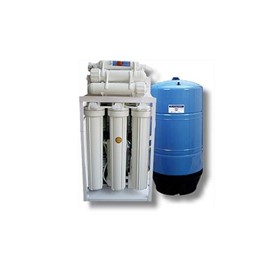
Laboratory Water Purifier Systems - 20/30/40L ...
Laboratory Water Purifier Systems - 20/30/40L
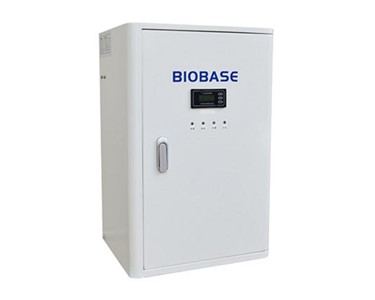
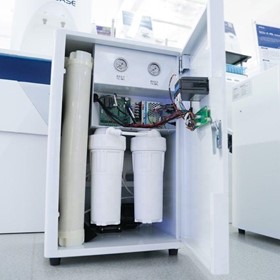
The Biobase Laboratory Water Purifier 20/30/40L is a range of water purification systems that are designed specifically for laboratories. These systems are manufactured by Biobase, a leading provider of laboratory equipment and solutions
Applications for this product
- Autoclave
- Humidification
- Glassware washing/rinsing
- General lab equipment (water baths, incubators, etc.)
- Feed water to Type 1 systems
- Media prep
- Buffer prep
- Chemical and biochemical reagent prep
- and other
Features of this product
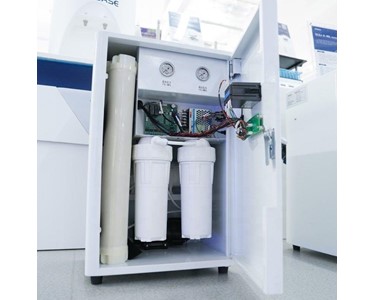
- Nano RO membrane filters tiny substances more efficiently.
- Fully automatic control, one key boot, simple operation.
- With high-pressure and low-pressure protection, safer operation.
- With consumable replacement alarm.
- Compliance with national standard GB/T6682-2008 water requirements.
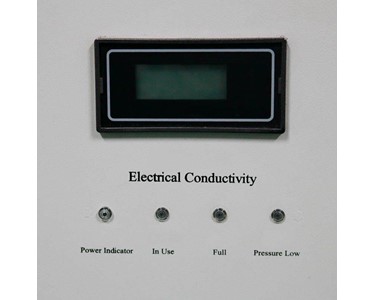
- LCD to display water quality information.
Why choose this product
- Compact size
- User-friendly interface with a touchscreen
- Real-time data
Specifications of this product
- Model: SCSJ-II-20L, SCSJ-II-30L, SCSJ-II-40L
- Water Output Type: RO water outlet x1 and DI water outlet x1
- Water Output Speed Max: 20/30/40 L/h
- Purifying Procedure: PF+AC+RO+DI
- Water Supply Requirement: When working inlet 0.1-0.3Mpa, quality GB5749,15 ~ 35°C
- Environmental Requirements: 15 ~ 35°C Relative Humidity≤80%
- Flow Rate: 1750ml/min
- Consumption: 113W
- Power Supply: AC220V±10%, 50Hz±5% (Standard); AC110V, 60Hz (Optional)
- Standard Configuration: Main body , 25Lwater tank, accessory pack
- Instrument Size(W*D*H): 403*325*650mm
- Gross Weight: 40kg
Biobase Laboratory Water Purifier Systems
The Biobase Laboratory Water Purifier 20/30/40L is a range of water purification systems that are designed specifically for laboratories. These systems are manufactured by Biobase, a leading provider of laboratory equipment and solutions. There are several benefits to using the Biobase Laboratory Water Purifier 20/30/40L in a laboratory setting.
Biobase Laboratory Water Purifiers are designed to produce high-purity water that is suitable for use in a wide range of laboratory applications. The systems use a multi-stage filtration process that removes impurities and contaminants from the water, including bacteria, viruses, organic compounds, and heavy metals. This ensures that the water is of the highest quality and is safe to use in various lab experiments and testing.
A primary benefit of these Biobase Laboratory Water Purifier systems is their compact size. These systems are much smaller than other laboratory water purification systems, which makes them ideal for laboratories with limited space. Despite their small size, the Biobase Laboratory Water Purifier 20/30/40L systems are highly efficient and produce high-quality water.
The Biobase Laboratory Water Purifier 20/30/40L is also easy to use and operate. The system features a user-friendly interface that allows for easy monitoring and control of the purification process. The touchscreen display provides real-time information on the status of the purification process, as well as alerts for maintenance and filter replacements.
Another benefit of the Biobase Laboratory Water Purifier 20/30/40L is its efficiency. The system is designed to be highly efficient, with low water wastage and low energy consumption. This makes it an environmentally friendly choice for laboratories that are looking to reduce their carbon footprint and minimize their impact on the environment.
Overall, the Biobase Laboratory Water Purifier 20/30/40L is a high-quality and reliable water purification system that is ideal for laboratories with limited space. Its advanced filtration technology, user-friendly interface, efficiency, and compact size make it an excellent choice for laboratories that require a high degree of purity and reliability in their water supply.
About High Purity Laboratory Water
1. Ultrapure Water (Type 1)
With a resistivity of 18.2 M?-cm at 25°C, ultrapure (Type 1) water is a requirement for analytical laboratories. Flow cytometry, pyrogen-sensitive applications, and cell and tissue culture are all typical applications for Type 1 water.
Water with this type of resistivity can still contain organic contaminants, endotoxins, and nucleases which don’t impact on resistivity values, so other technologies are required to eliminate them.
Equipment that produces Type 1 water is often referred to as a “polisher” and can be fed from a localized reverse osmosis system, or a centralized ring main depending on usage rate.
Bacteria and organic levels are reduced to the required level, through a dual-wavelength ultraviolet (UV) light (185nm and 254nm). The water flows through a vessel containing a UV light, and as it passes through, the light, destroys any genetic organic matter, associated with reproductive functions. This damage prevents the microorganism from multiplying or replicating, which means no infection can occur.
An Ultrafilter (UF) typically rated at 0.01 microns, can also be employed to produce DNase/RNase free water. By using size exclusion, ultrafiltration removes particles and macromolecules including bacteria and viruses. This technology is employed at the end of the system, to ensure the near-total removal of macromolecular impurities.
Each type of water must go through various processes and technologies to achieve a certain standard of purity. The level of purity then reflects what can be used in laboratories. For that reason, it’s important to be able to distinguish between the four types of water, so you can understand how they are utilised in laboratories.
2. General Laboratory Grade Water (Type 2)
Also known as general laboratory grade water, Type 2 water is produced through a combination of reverse osmosis, and additional technology such as ion exchange or electro deionisation (EDI). Electro deionisation (EDI)is an electrically driven water treatment technology that uses electricity, ion exchange membranes, and resin to remove ionised species from water.
Deionisation removes ions (cations and anions) from RO water by using ion-selective resins. Chemical reactions occur as the water passes through the ion exchange beads, resulting in the removal of ions. This process is continued until all unwanted ions are replaced by hydrogen and hydroxyl ions, which form pure water once combined.
Electro deionisation (EDI) is a continuous, chemical-free process of removing ionized and ionizable species from feedwater using DC power. EDI is typically used to polish reverse osmosis permeate and is an alternative to Ion Exchange Technology. Using electro deionisation eliminates the need to store and handle the hazardous chemicals used for resin regeneration in mixed beds.
Reverse Osmosis and Ion Exchange Technology create Type 2 water, which has a resistivity of 1-15M?-cm, making it suitable for general applications such as buffer and media production, spectrophotometry, and general chemistry.
3. Primary Grade Water (Type 3)
Primary grade pure water (Type 3) uses carbon filtration, cartridge filtration, and RO technology and is the most cost-effective way to reduce water contaminants for this application.
Removing up to 99.5% of feed water contaminants, reverse osmosis membranes rated at nominally 0.0001 microns purify water by rejection. Reverse osmosis (RO) is a water purification process that uses a partially permeable membrane to separate ions, unwanted molecules, and larger particles from drinking water. In reverse osmosis, an applied pressure is used to overcome osmotic pressure.
RO technology applies diffusion as opposed to separation, rejecting particles with a higher molecular weight. Feed water temperature, pressure, and the physical condition of the RO membrane are all parameters that affect rejection rates. Rejection rates depend on a number of factors including feed water quality, water temperature, and pressure. For this reason, RO water can’t be specifically classified.
RO water is most commonly used at the starting point for many applications in laboratories, including feeding glassware washing machines, and autoclaves. It can also be used as a pre-treatment for ultrapure water systems, or anything that’s considered non-critical.
4. Feed Water
Feed water is also referred to as raw or potable water, and the quality of it is dependent on its source. It is important to obtain a detailed water analysis before deciding on an appropriate system for your facility. Any contaminants present in the feed water can substantially inhibit the performance of the RO membrane and result in fouling and reduced service life. Below are some examples:
Hard Water: This will require a water softener to remove hardness.
Presence of colloidal clay particles: Will require media filtration and also ultrafiltration as a pretreatment.
Presence of iron and manganese: Will require water softener or catalytic media filtration.
Low feed pressure: Will require a booster pump to ensure sufficient pressure for the RO system. Each filtration step will result in a pressure drop; hence a reasonable feed pressure is required to begin with. Some laboratory units do come with internal booster pumps that mitigate this concern. The data sheet of the particular RO membrane used will provide data such as optimum supply pressure to maximise ion rejection.
To contact Pacific Water Technology about Laboratory Water Purifier Systems - 20/30/40L use Get a quote.
The Biobase Laboratory Water Purifier range treats water through PF, AC, RO and DI stages, providing separate RO and DI outlets for laboratory use. Its Nano RO membrane filters tiny substances more efficiently during purification. Laboratories needing feed water for Type 1 systems can use the purifiers to supply water for their Type 1 setup.
- Maximum water output: 20/30/40 L/h
- Touchscreen LCD displays water quality information in real time
- High- and low-pressure protection
- Consumable replacement alarm
- Complies with GB/T6682-2008 national water requirements
Source: listing by Pacific Water Technology on IndustrySearch · Updated 4 Nov 2026
AI Overview is generated by artificial intelligence and may contain mistakes.
Written by AI from the listing by Pacific Water Technology on IndustrySearch. It is meant to use only what that listing says, but it can still get details wrong, so check them with the supplier before you buy.
Thanks for your feedback.
- Your delivery location?
- NSW
- VIC
- QLD
- SA
- WA
- NT
- ACT
- TAS
- New Zealand
- Papua New Guinea
- Afghanistan
- Albania
- Algeria
- Andorra
- Angola
- Antigua and Barbuda
- Argentina
- Armenia
- Austria
- Azerbaijan
- Bahamas
- Bahrain
- Bangladesh
- Barbados
- Belarus
- Belgium
- Belize
- Benin
- Bhutan
- Bolivia
- Bosnia and Herzegovina
- Botswana
- Brazil
- Brunei
- Bulgaria
- Burkina Faso
- Burma
- Burundi
- Cabo Verde
- Cambodia
- Cameroon
- Canada
- Central African Republic
- Chad
- Chile
- China
- Colombia
- Comoros
- Congo (Brazzaville)
- Congo (Kinshasa)
- Costa Rica
- Côte d'Ivoire
- Croatia
- Cuba
- Cyprus
- Czechia
- Denmark
- Djibouti
- Dominica
- Dominican Republic
- Ecuador
- Egypt
- El Salvador
- Equatorial Guinea
- Eritrea
- Estonia
- Ethiopia
- Fiji
- Finland
- France
- Gabon
- Gambia
- Georgia
- Germany
- Ghana
- Greece
- Grenada
- Guatemala
- Guinea
- Guinea-Bissau
- Guyana
- Haiti
- Holy See
- Honduras
- Hungary
- Iceland
- India
- Indonesia
- Iran
- Iraq
- Ireland
- Israel
- Italy
- Jamaica
- Japan
- Jordan
- Kazakhstan
- Kenya
- Kiribati
- Korea, North
- Korea, South
- Kosovo
- Kuwait
- Kyrgyzstan
- Laos
- Latvia
- Lebanon
- Lesotho
- Liberia
- Libya
- Liechtenstein
- Lithuania
- Luxembourg
- Macedonia
- Madagascar
- Malawi
- Malaysia
- Maldives
- Mali
- Malta
- Marshall Islands
- Mauritania
- Mauritius
- Mexico
- Federated States of Micronesia
- Moldova
- Monaco
- Mongolia
- Montenegro
- Morocco
- Mozambique
- Namibia
- Nauru
- Nepal
- Netherlands
- New Zealand
- Nicaragua
- Niger
- Nigeria
- Norway
- Oman
- Pakistan
- Palau
- Panama
- Papua New Guinea
- Paraguay
- Peru
- Philippines
- Poland
- Portugal
- Qatar
- Romania
- Russia
- Rwanda
- Saint Kitts and Nevis
- Saint Lucia
- Saint Vincent and the Grenadines
- Samoa
- San Marino
- Sao Tome and Principe
- Saudi Arabia
- Senegal
- Serbia
- Seychelles
- Sierra Leone
- Singapore
- Slovakia
- Slovenia
- Solomon Islands
- Somalia
- South Africa
- South Sudan
- Spain
- Sri Lanka
- Sudan
- Suriname
- Swaziland
- Sweden
- Switzerland
- Syria
- Taiwan
- Tajikistan
- Tanzania
- Thailand
- Timor-Leste
- Togo
- Tonga
- Trinidad and Tobago
- Tunisia
- Turkey
- Turkmenistan
- Tuvalu
- Uganda
- Ukraine
- United Arab Emirates
- United Kingdom
- United States
- Uruguay
- Uzbekistan
- Vanuatu
- Venezuela
- Vietnam
- Yemen
- Zambia
- Zimbabwe
Light Commercial RO System 800 GPD
Reverse Osmosis Systems - 12000RO - 48000RO GPD
Replacement Filters RO -1 Year Pack - Water Filter Cartridges
Bore, Rain, Well and General Use Water Quality Test Kit (15 Tests)
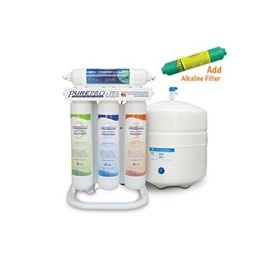
Reverse Osmosis Water Filters – Alkaline ERS-106A
Solenoid Valves | RO011
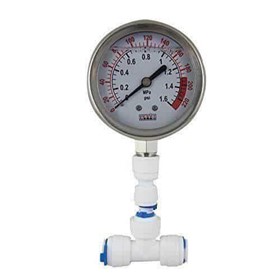
Pressure Gauge | RO006a
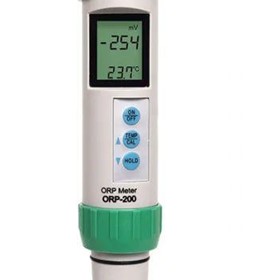
Handheld ORP Meter | ORP-200
Ball Valve | 1/4″ Tube
Activated Glass Media - AFM
Laboratory Water Purifier Systems - 20/30/40L
Laboratory Purified Water Systems - Smart Q15/Q30
Iron Removal Filter - MediaPlus
Mixed Bed Resin - MB400 Purolite
Water Softeners - Commercial
Industrial Ozone Generator - DNO 10-100, 200, 300, 500, 1000 series
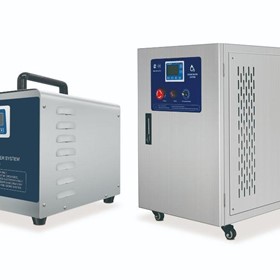
Ozone Generator - DN-OWS-PLUS
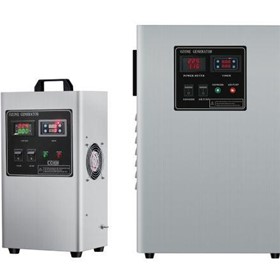
Swimming Pool Ozone Generator - DNA 7g, 10g, 15g, 20g
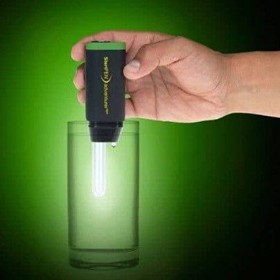
SteriPEN Traveler UV Water Purifier
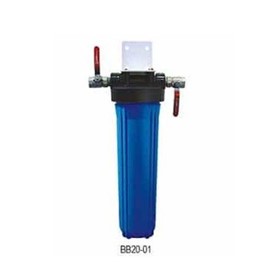
Whole House Jumbo Filter Housing BB20-01
Laboratory Purified Water Systems - Smart Q15/Q30
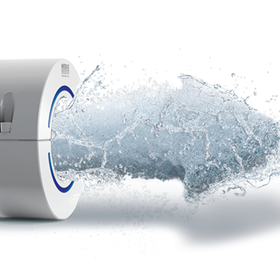
Merus Water Treatment Ring/Unit | Water Purification System
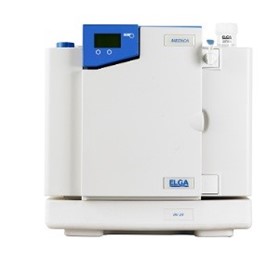
ELGA VEOLIA - Water Purification System - MEDICA® EDI 15/30
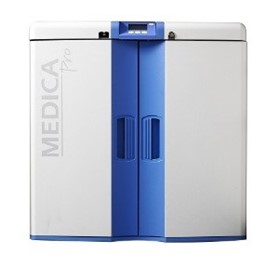
ELGA VEOLIA - Water Purification System - MEDICA® Pro EDI 60/120
Portable Manual Water Purification System - 800 litres per hour
Portable Manual Water Purification System - 1000 litres per hour
Portable Manual Water Purification System - 2000 litres per hour
Portable Manual Water Purification System - 3000 litres per hour
Portable Manual Water Purification System -5000 litres per hour
Portable Manual Water Purification System - 7500 litres per hour
Portable Manual Water Purification System - 10000 litres per hour
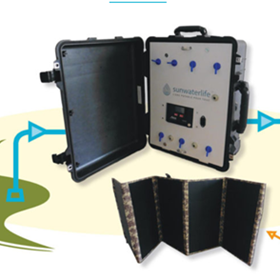
Aqualink | Water Purification System
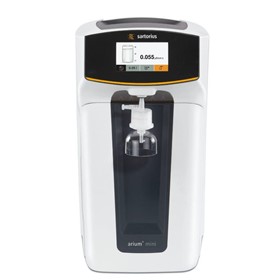
Arium Mini Plus | Pure Water Systems
Arium Comfort I - Pure Water Systems
Arium Comfort II | Pure Water Systems
Arium Advance EDI Pure Water Systems
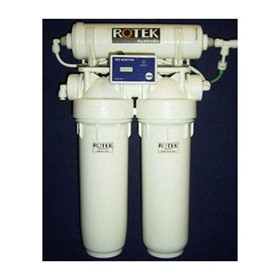
Water Treatment and Filtration Systems | Laboratory Grade QDI-DUO
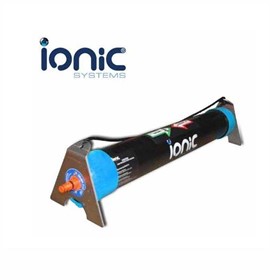
Water Purification Systems I Caddy DI System
Water Purification System | Enviroswim ES3 System
Thanks for your help!
Sorry! Unable to submit your request at this time. Please try again later.
Report this product