Bore, Rain, Well and General Use Water ...
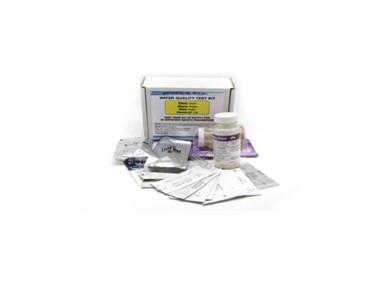
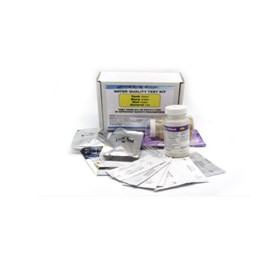
Bore, Rain, Well and General Use Water Quality Test Kit (15 Tests) Price Guide: $133
Provides a comprehensive solution for testing water quality. It includes 15 essential tests to evaluate various water parameters, ensuring accurate results for safe, clean water.
The inexpensive Bore Water, Rain Water, Well Water, and General Use Water Quality Test Kit allows you, in a few simple steps, to determine if your water contains harmful or undesirable levels of bacteria, lead, copper, iron, pesticide, free chlorine, hydrogen sulphide, chloride, nitrate, nitrite, sulphate, pH, total alkalinity, total chlorine and hardness.
Product Details
Water Quality Test Kit, 15-Parameters,
- Two (2) of pH, Total Alkalinity, Total Hardness, Total Chlorine, Nitrate/Nitrite Nitrogen, Free Chlorine, Iron, Copper, Hydrogen Sulfide, Sulphate, Chloride, and Bacteria test; one (1) Pesticide, and one (1) Lead in water
- Dip and read visual strips
- Perfect for home water testing and school projects
Kit Includes:
- 2 4-in-1 Strips including pH, Total Alkalinity, Total Chlorine, & Total Hardness
- 2 Bacteria
- 2 Chloride
- 2 Chlorine, Free
- 2 Copper
- 2 Hydrogen Sulfide
- 2 Iron
- 1 Lead
- 2 Nitrate/Nitrite Nitrogen
- 1 Pesticide
- 2 Sulphate
Recent water contamination of our town water and also concerns about copper and lead poisoning due to unsuitable faucets and lead based solder have highlighted concerns about safety of our water supply.
Lead can enter drinking water when service pipes that contain lead corrode, especially where the water has high acidity or low mineral content that corrodes pipes and fixtures. The most common problem is with brass or chrome-plated brass faucets and fixtures with lead solder, from which significant amounts of lead can enter into the water, especially hot water.
Homes built before 1986 are more likely to have lead pipes, fixtures and solder. The Safe Drinking Water Act (SDWA) has reduced the maximum allowable lead content – that is, content that is considered “lead-free” – to be a weighted average of 0.25 percent calculated across the wetted surfaces of pipes, pipe fittings, plumbing fittings, and fixtures and 0.2 percent for solder and flux.
In adequate backflow prevention has caused cases of gasto and other waterborne diseases .Within distribution systems there exist points called cross-connections where nonpotable water can be connected to potable sources. These cross-connections can provide a pathway for backflow of nonpotable water into potable sources. Backflow can occur either because of reduced pressure in the distribution system (termed backsiphonage) or the presence of increased pressure from a nonpotable source (termed backpressure). Backsiphonage may be caused by a variety of circumstances, such as mainbreaks, flushing, pump failure, or emergency firefighting water drawdown.
Don’t risk it – test your water supply on a regular basis.
Before You Begin
1. Contents:
– One Bacteria Test Vial
– One Lead / Pesticide Test Packet
– One Nitrate / Nitrite Test Packet
– One pH / Hardness / Chlorine Test Packet
2.Keep tests out of reach of children or pets. Do not ingest anything from this test kit. Do not drink water sample used for testing.
Store and use at room temperature (60-86 F).
Do not use on hot water or water containing bleach detergents. Do not re-use any part of the test kit.
3. Do not open packets or vial until you are ready to perform the tests.
4. Read and follow all instructions carefully.
Bacteria Test Instructions
1. Take out the Bacteria Test vial and set upright on a flat surface.
2. Collect water sample or turn on tap to a very slow stream.
3. Carefully twist off cap and fill vial to 1/2 inch below the top (to 5 ml line). DO NOT OVERFILL and DO NOT SPILL the bacterial growth powder in the vial.
4. Replace cap and twist on tightly. Shake the vial vigorously for 20 seconds.
5. Place the capped vial upright in a warm area (70-90 F) where it cannot be disturbed for 48 hrs.
6. After 48 hrs., observe the color of the liquid without opening the vial:
Purple Color: Negative Result (No bacteria were detected).
Yellow Color: Positive Result (It is highly likely that potentially harmful bacteria were detected).
7. For positive results, add bleach to the sample before pouring down the toilet, then wash hands carefully. Negative samples may be poured directly into the toilet. Discard vial in the trash.
Lead / Pesticide Test Instructions
The Watersafe Lead Test can detect dissolved lead at levels below the EPA Action level of 15 parts per billion (ppb). The Watersafe Pesticide Test detects two of the most common pesticides used in the US at or below the EPA Maximum Contaminant Level (atrazine – 3 ppb, and simazine – 4 ppb).
1. Open Lead / Pesticide packet and take out all contents. The packet contains a test vial, a dropper pipette, two Watersafe test strips, and a desiccant (to be discarded).
2. Using dropper, place exactly TWO dropper-fuls of water sample into test vial. To pick up the sample, tightly squeeze the bulb at the end of the dropper and place the open end into the water sample. Release the bulb to pick up the sample, then squeeze again to expel the sample into the vial.
3. Swirl vial gently for several seconds. Place on a flat surface.
4. Place both test strips into the test vial, with arrows pointing DOWN.
5. Wait 10 minutes. Do not disturb strips or vial during this time. Blue lines will appear on the strips.
6. Take the strips out of the vial and lay them on a flat surface with the arrows pointing to the LEFT.
Read Results.
If you only see the LEFT line (next to number 1), the test is negative)
Negative: The LEFT line (next to number 1) is darker than the RIGHT line (next to number 2)
Positive: The RIGHT line (next to number 2) is darker than the LEFT line (next to number 1), or lines are equally dark (Both LEFT and RIGHT lines are equally dark
7. Note: If no lines appear, or both lines are very light, the test did not run properly and the result is not valid.
If a test strip shows a positive result, your water sample may contain lead or pesticides at a toxic level.
Nitrate / Nitrite Test Instructions
1.Carefully open Nitrate / Nitrite Test packet and take out test strip.
2. Immerse the reagent pads into water sample for 2 seconds, remove, after 1 minute match colours with the chart below.
3. Colours are stable for 1 minute.
pH | Hardness | Chlorine Test Instructions
1. Carefully open pH/ Hardness/ Chlorine Test packet and take out strip.
2. Immerse the reagent pads into water sample and remove immediately. Hold the strip level for 15 seconds.
3. Match pH, Total Hardness and Total Chlorine pads (in that order) to the colour chart.
To contact Pacific Water Technology about Bore, Rain, Well and General Use Water Quality Test Kit (15 Tests) use Get a quote.
- Your delivery location?
- NSW
- VIC
- QLD
- SA
- WA
- NT
- ACT
- TAS
- New Zealand
- Papua New Guinea
- Afghanistan
- Albania
- Algeria
- Andorra
- Angola
- Antigua and Barbuda
- Argentina
- Armenia
- Austria
- Azerbaijan
- Bahamas
- Bahrain
- Bangladesh
- Barbados
- Belarus
- Belgium
- Belize
- Benin
- Bhutan
- Bolivia
- Bosnia and Herzegovina
- Botswana
- Brazil
- Brunei
- Bulgaria
- Burkina Faso
- Burma
- Burundi
- Cabo Verde
- Cambodia
- Cameroon
- Canada
- Central African Republic
- Chad
- Chile
- China
- Colombia
- Comoros
- Congo (Brazzaville)
- Congo (Kinshasa)
- Costa Rica
- Côte d'Ivoire
- Croatia
- Cuba
- Cyprus
- Czechia
- Denmark
- Djibouti
- Dominica
- Dominican Republic
- Ecuador
- Egypt
- El Salvador
- Equatorial Guinea
- Eritrea
- Estonia
- Ethiopia
- Fiji
- Finland
- France
- Gabon
- Gambia
- Georgia
- Germany
- Ghana
- Greece
- Grenada
- Guatemala
- Guinea
- Guinea-Bissau
- Guyana
- Haiti
- Holy See
- Honduras
- Hungary
- Iceland
- India
- Indonesia
- Iran
- Iraq
- Ireland
- Israel
- Italy
- Jamaica
- Japan
- Jordan
- Kazakhstan
- Kenya
- Kiribati
- Korea, North
- Korea, South
- Kosovo
- Kuwait
- Kyrgyzstan
- Laos
- Latvia
- Lebanon
- Lesotho
- Liberia
- Libya
- Liechtenstein
- Lithuania
- Luxembourg
- Macedonia
- Madagascar
- Malawi
- Malaysia
- Maldives
- Mali
- Malta
- Marshall Islands
- Mauritania
- Mauritius
- Mexico
- Federated States of Micronesia
- Moldova
- Monaco
- Mongolia
- Montenegro
- Morocco
- Mozambique
- Namibia
- Nauru
- Nepal
- Netherlands
- New Zealand
- Nicaragua
- Niger
- Nigeria
- Norway
- Oman
- Pakistan
- Palau
- Panama
- Papua New Guinea
- Paraguay
- Peru
- Philippines
- Poland
- Portugal
- Qatar
- Romania
- Russia
- Rwanda
- Saint Kitts and Nevis
- Saint Lucia
- Saint Vincent and the Grenadines
- Samoa
- San Marino
- Sao Tome and Principe
- Saudi Arabia
- Senegal
- Serbia
- Seychelles
- Sierra Leone
- Singapore
- Slovakia
- Slovenia
- Solomon Islands
- Somalia
- South Africa
- South Sudan
- Spain
- Sri Lanka
- Sudan
- Suriname
- Swaziland
- Sweden
- Switzerland
- Syria
- Taiwan
- Tajikistan
- Tanzania
- Thailand
- Timor-Leste
- Togo
- Tonga
- Trinidad and Tobago
- Tunisia
- Turkey
- Turkmenistan
- Tuvalu
- Uganda
- Ukraine
- United Arab Emirates
- United Kingdom
- United States
- Uruguay
- Uzbekistan
- Vanuatu
- Venezuela
- Vietnam
- Yemen
- Zambia
- Zimbabwe
Light Commercial RO System 800 GPD
Reverse Osmosis Systems - 12000RO - 48000RO GPD
Replacement Filters RO -1 Year Pack - Water Filter Cartridges
Bore, Rain, Well and General Use Water Quality Test Kit (15 Tests)
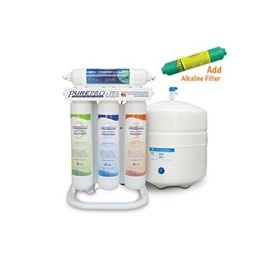
Reverse Osmosis Water Filters – Alkaline ERS-106A
Solenoid Valves | RO011
Pressure Gauge | RO006a
Handheld ORP Meter | ORP-200
Ball Valve | 1/4″ Tube
Activated Glass Media - AFM
Laboratory Water Purifier Systems - 20/30/40L
Laboratory Purified Water Systems - Smart Q15/Q30
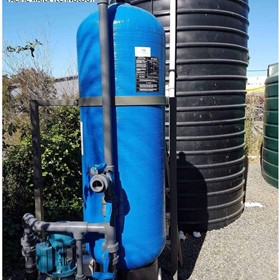
Iron Removal Filter - MediaPlus
Mixed Bed Resin - MB400 Purolite
Water Softeners - Commercial
Industrial Ozone Generator - DNO 10-100, 200, 300, 500, 1000 series
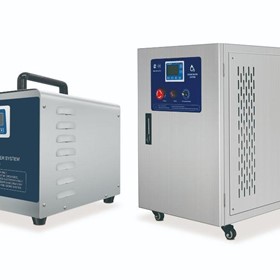
Ozone Generator - DN-OWS-PLUS
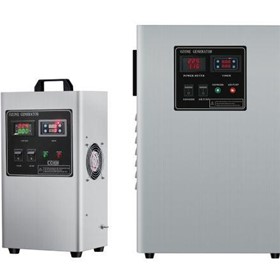
Swimming Pool Ozone Generator - DNA 7g, 10g, 15g, 20g
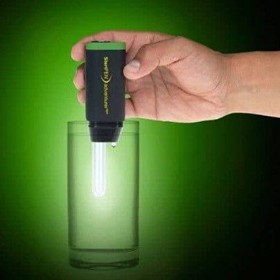
SteriPEN Traveler UV Water Purifier
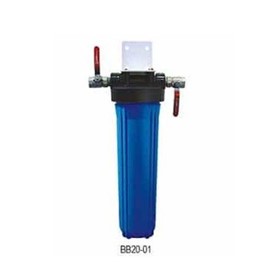
Whole House Jumbo Filter Housing BB20-01
Thanks for your help!
Sorry! Unable to submit your request at this time. Please try again later.
Report this product