
Cooling & Freezing Tunnel in Sydney

Join industrial buyers comparing supplier quotes and buying with confidence. Free, quick and easy.
How IndustrySearch works
Tell us what you need
Answer a few quick questions about the equipment you're looking for.
Get personalised quotes
Receive tailored quotes from relevant Australian suppliers.
Compare and choose
Compare quotes, ask questions and choose the best option for you.
 Save time
 Compare quotes
 Buy with confidence
Save time, compare quotes & buy with confidence
Cooling & Freezing Tunnel Suppliers in Sydney

JB & Brothers Pty Ltd is an Cooling & Freezing Tunnel supplier to Sydney
JB & Brothers Pty Ltd is a company that supplies professional bakery equipment to all large and small size industrial bakeries within Australia and New Zealand. We represent Europe’s leading companies in material handling and dosing, dough mixing, dough processing and make-up, baking, cooling and freezing. The company is also specialised in cleaning silos, maintenance and ...Customers: Tiptop Bakery, Goodman Fielder


Wyma Solutions is an Cooling & Freezing Tunnel supplier to All
Wyma Solutions is one of the most trusted names in post-harvest vegetable and fruit handling equipment worldwide. For over three decades, we have helped growers, packers, and processors deliver produce of the highest quality—safely, efficiently, and sustainably. From our New Zealand roots to a global presence, we have built our reputation on innovation, collaboration, and dedication ...


Proquip Solutions Limited is an Cooling & Freezing Tunnel supplier to All
Proquip Solutions supplies a comprehensive range of processing and packaging equipment from leading global manufacturers. Our product offering covers the food and beverage processing industries, packaging applications, and equipment solutions that drive manufacturing efficiency. We specialise in end-to-end processing solutions — from design to implementation — ensuring future-proofed ...

- **What is a cooling and freezing tunnel?**
- - An overview of the technology and its purpose in rapidly cooling or freezing products to preserve quality.
- **What are the key features to look for?**
- - Important specifications such as capacity, temperature range, energy efficiency, and control systems.
- **How do I determine the right size for my needs?**
- - Guidance on calculating the required capacity based on production volume and product types.
- **What are the installation requirements?**
- - Information on space, utilities, and any structural modifications needed for installation.
- **What maintenance is required?**
- - An outline of routine maintenance tasks and the importance of regular servicing for optimal performance.
- **What are the energy consumption and operating costs?**
- - Insights into the expected energy usage and factors that influence operational costs.
- **Are there any regulatory compliance issues?**
- - An overview of food safety standards and regulations that must be adhered to in Australia.
- **What is the expected lifespan of the equipment?**
- - Information on durability and factors that can affect the longevity of cooling and freezing tunnels.
- **What support and warranty options are available?**
- - Details on manufacturer warranties, customer support, and service agreements.
- **How can I finance the purchase?**
- - Options for financing, leasing, or government grants that may be available for purchasing such equipment.
- **How it Works:**
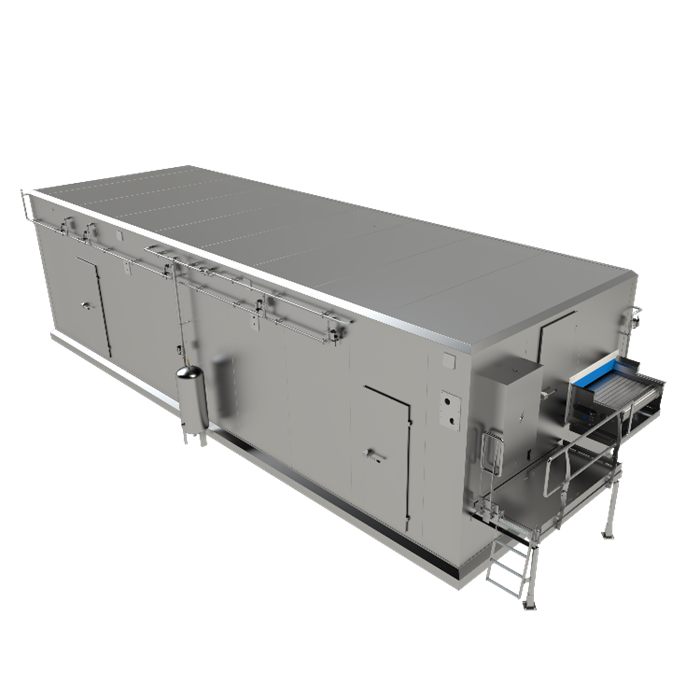
- **Design**: The tunnel is typically a long, enclosed conveyor system that allows products to move through it. It is equipped with refrigeration units that maintain low temperatures.
- **Cooling Process**: As products enter the tunnel, cold air is circulated around them. This air is often generated by evaporators that remove heat from the air, creating a chilling effect. The temperature inside the tunnel can be adjusted according to the specific requirements of the food being processed.
- **Freezing Process**: For freezing, the temperature is lowered significantly, often below -18°C (0°F). The products are exposed to extremely cold air, which freezes them quickly. Rapid freezing is crucial as it helps to form smaller ice crystals, preserving the texture and quality of the food.
- **Conveyor System**: The conveyor belt moves the products through the tunnel at a controlled speed, ensuring they spend the right amount of time in the cooling or freezing zone to achieve the desired temperature.
- **Energy Efficiency**: Modern cooling and freezing tunnels are designed to be energy-efficient, utilizing advanced insulation and refrigeration technologies to minimize energy consumption while maximizing performance.
- **Temperature Control**: Look for precise temperature settings and uniformity throughout the tunnel to ensure consistent product quality.
- **Airflow Design**: Efficient airflow systems are crucial for even cooling and freezing. Consider tunnels with adjustable airflow patterns to accommodate different products.
- **Capacity and Size**: Assess the tunnel's capacity to handle your production volume and the physical dimensions to fit your facility.
- **Energy Efficiency**: Opt for systems that utilize energy-efficient technologies to reduce operational costs and environmental impact.
- **Speed and Cycle Time**: Evaluate the speed at which products can be cooled or frozen, as this affects overall production efficiency.
- **Construction Materials**: Durable, hygienic materials that are easy to clean and maintain are essential for food safety and longevity.
- **Automation and Control Systems**: Advanced control systems for monitoring and automation can enhance operational efficiency and reduce labor costs.
- **Flexibility**: The ability to accommodate various product sizes and types can be beneficial for diverse production needs.
- **Maintenance Requirements**: Consider the ease of maintenance and availability of support services to minimize downtime.
- **Compliance with Regulations**: Ensure the tunnel meets industry standards and regulations for food safety and quality.
- **Temperature Control**: Allows precise regulation of heat for optimal cooking results.
- **Airflow Design**: Enhances cooking efficiency and ensures even heat distribution.
- **Energy Efficiency**: Designed to minimize energy consumption while maintaining performance.
- **Size and Capacity**: Available in various sizes to accommodate different cooking needs and kitchen spaces.
- **Ease of Cleaning**: Features that simplify maintenance and cleaning processes.
- **Size and Capacity**: Larger tunnels with higher capacity will typically cost more.
- **Technology**: Advanced systems with energy-efficient technologies or automation features may have higher upfront costs but can save money in the long run.
- **Customization**: Custom-built tunnels designed for specific products or processes can increase costs.
- **Installation and Maintenance**: Additional costs for installation, maintenance, and operation should also be considered.
- **Energy Consumption**:
- - **Lighting**: Tunnels require significant lighting for safety and visibility, which can lead to high energy usage, especially in longer tunnels.
- - **Ventilation**: Many tunnels, particularly road and rail tunnels, need ventilation systems to manage air quality and remove exhaust fumes, contributing to energy consumption.
- - **Pumping Systems**: In tunnels prone to flooding, pumping systems are necessary to manage water, adding to energy costs.
- - **Maintenance Equipment**: Energy is also consumed by equipment used for maintenance and inspection of the tunnel infrastructure.
- **Operating Costs**:
- - **Electricity Costs**: The cost of electricity for lighting, ventilation, and other systems can be substantial, depending on the size and length of the tunnel.
- - **Maintenance Costs**: Regular maintenance is essential for safety and efficiency, which includes inspections, repairs, and system upgrades.
- - **Labor Costs**: Staffing for operations, maintenance, and emergency response contributes to overall operating expenses.
- - **Insurance and Safety Compliance**: Costs associated with insurance and meeting safety regulations can also be significant.
- **Consumer Protection**: The Australian Competition and Consumer Commission (ACCC) enforces laws to protect consumers, including the Australian Consumer Law (ACL).
- **Workplace Health and Safety (WHS)**: Each state and territory has its own WHS legislation, which outlines the responsibilities of employers to ensure a safe working environment.
- **Environmental Regulations**: The Environment Protection and Biodiversity Conservation Act 1999 (EPBC Act) governs environmental protection and biodiversity conservation.
- **Privacy and Data Protection**: The Privacy Act 1988 regulates how personal information is handled by businesses and government agencies.
- **Building and Construction Standards**: The National Construction Code (NCC) sets the minimum requirements for the design and construction of buildings.
- **Food Safety**: The Food Standards Australia New Zealand (FSANZ) develops food safety standards that must be followed by food businesses.
- **Financial Services**: The Australian Securities and Investments Commission (ASIC) regulates financial services and markets, ensuring compliance with the Corporations Act 200
- **Telecommunications**: The Telecommunications Act 1997 and related regulations govern the telecommunications industry.
- **Regular Inspections**: Conduct routine checks on the structural integrity of the tunnels, including insulation and seals.
- **Cleaning**: Keep the tunnels clean to prevent contamination. This includes cleaning surfaces, drains, and any equipment used within the tunnels.
- **Refrigeration System Maintenance**: Inspect and service compressors, evaporators, and condensers regularly. Check for refrigerant leaks and ensure proper functioning of the cooling system.
- **Temperature Monitoring**: Regularly calibrate and test temperature sensors and control systems to ensure accurate readings and consistent performance.
- **Airflow Management**: Check and clean fans and ducts to ensure proper airflow and prevent ice buildup.
- **Electrical System Checks**: Inspect wiring, controls, and safety systems to ensure they are functioning correctly and safely.
- **Defrosting**: Schedule regular defrost cycles for freezing tunnels to prevent ice accumulation that can affect efficiency.
- **Documentation**: Maintain detailed records of maintenance activities, inspections, and repairs for compliance and operational efficiency.
- **Training Staff**: Ensure that staff are trained in proper operating procedures and maintenance protocols to prevent issues.
- **Emergency Preparedness**: Have a plan in place for equipment failure, including backup systems and emergency contacts.
- **Warranty Duration**: Most products come with a limited warranty that lasts from one to several years, covering defects in materials and workmanship.
- **Types of Coverage**: Warranties may include parts and labor for repairs, replacement of defective items, and sometimes accidental damage coverage, depending on the product.
- **Customer Support**: Manufacturers usually offer customer support through various channels, including phone, email, and live chat. Some may also provide online resources like FAQs, user manuals, and troubleshooting guides.
- **Extended Warranty Options**: Many companies offer extended warranty plans for an additional fee, which can provide longer coverage or additional services.
- **Return Policies**: Most retailers have return policies that allow customers to return products within a specified period if they are unsatisfied, often with conditions regarding the product's condition and packaging.
- **Service Centers**: Some manufacturers have authorized service centers where customers can get repairs done, often at no cost if the product is still under warranty.
- **Assess Your Requirements**: Identify what you will be using the item for. Consider factors such as the number of people using it, the type of activities, and any specific features you need.
- **Research Specifications**: Look up the specifications of the item you are considering. This includes dimensions, weight limits, and volume capacity.
- **Consider Future Needs**: Think about potential future requirements. Will you need more capacity as your needs change? It may be wise to choose a slightly larger size to accommodate growth.
- **Evaluate Space Constraints**: Measure the available space where the item will be used or stored. Ensure that the size fits comfortably within that space.
- **Read Reviews and Recommendations**: Look for user reviews and expert recommendations to see how the size and capacity perform in real-world scenarios.
- **Test if Possible**: If feasible, try out the item in-store or through a rental service to get a feel for its size and capacity.
- **Consult with Experts**: If you're unsure, seek advice from professionals or knowledgeable individuals in the relevant field.
Cooling & Freezing Tunnel Costs and Supplier Insights
If you are looking to buy a Cooling & Freezing Tunnel for sale, suppliers on IndustrySearch include JB & Brothers Pty Ltd, Wyma Solutions
Why choose a supplier in Sydney for Cooling Tunnel Quotes?
If you are in Sydney and considering purchasing a Cooling Tunnel, it's worth considering Sydney-based suppliers. Doing so offers several benefits that are particularly relevant to businesses in the area. Here are the top reasons why opting for a local Sydney supplier can be the best decision for your Cooling Tunnel buying needs.
Personalised Cooling Tunnel ConfigurationsBenefit from personalised Cooling Tunnel configurations available exclusively through select local suppliers.
Immediate Assistance in SydneyEnjoy immediate assistance and troubleshooting in Sydney. Fast resolution keeps your operations running smoothly.
Access the Local Cooling Tunnel InnovationsAccess the latest Cooling Tunnel innovations quickly by partnering with suppliers. Access the latest technologies faster with your local supplier.
Supporting Sustainable Cooling Tunnel Suppliers in SydneySupport local and sustainable Cooling Tunnel suppliers. Their commitment to eco-friendly production aligns with responsible corporate practices.
Compliance with Regulations by Buying LocallyEnsure full compliance with Sydney regulations when you buy a Cooling Tunnel locally. Local suppliers are familiar with local standards, helping you avoid costly issues.
Support Local Industry with Cooling Tunnel PurchasesSupport local industry and commerce by choosing Cooling Tunnel from Sydney. Every purchase helps sustain and grow the local business ecosystem.
Buy a Cooling & Freezing Tunnel Near Me
Cooling & Freezing Tunnel for sale in Brisbane
Cooling & Freezing Tunnel for sale in Melbourne
Cooling & Freezing Tunnel for sale in Perth
Cooling & Freezing Tunnel for sale in Hobart
Cooling & Freezing Tunnel for sale in Adelaide
Cooling & Freezing Tunnel for sale in Darwin
Cooling & Freezing Tunnel Articles & Reviews



 Reach valuable industrial buyers in minutes
 Promote key products & content
 Drive cost effective & measurable sales