
Flow Sensor in Melbourne

Join industrial buyers comparing supplier quotes and buying with confidence. Free, quick and easy.


How IndustrySearch works
Tell us what you need
Answer a few quick questions about the equipment you're looking for.
Get personalised quotes
Receive tailored quotes from relevant Australian suppliers.
Compare and choose
Compare quotes, ask questions and choose the best option for you.
 Save time
 Compare quotes
 Buy with confidence
Save time, compare quotes & buy with confidence
Flow Sensor Suppliers in Melbourne
Pacific Sensor Technologies Pty Ltd is an Flow Sensor supplier to Melbourne
Pacific Sensor Technologies Pty Ltd (PST) specializes in delivering high-quality data collection systems, offering a comprehensive range of monitoring and measurement solutions tailored to meet the needs of diverse industries. With a strong focus on precision, reliability, and innovation, our product portfolio includes state-of-the-art data loggers, advanced sensors, specialized ...Customers: Pfizer, CSIRO, ANSTO, Rio Tinto, In-Vitro, Device Technologies, Australian Universities


IDM Instruments is an Flow Sensor supplier to Melbourne
We are a leading manufacturer & supplier of testing & measuring instruments, providing quality solutions to customers’ manufacturing process & laboratory testing requirements. We supply a vast range of testing equipment to multiple industries. Instruments are used to test different aspects required for quality control & cost reduction of a final product, with reference to ...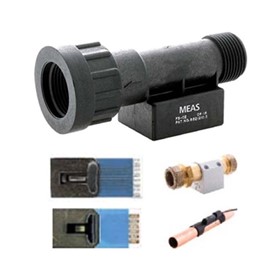

ifm efector is an Flow Sensor supplier to Melbourne
ifm provides German engineered and manufactured sensor and control solutions for automation, including position sensors and object recognition, fluid sensors and diagnostic systems, bus systems and identification systems, control systems and connection technology. ifm provides the right combination of German engineering and local service and support. For 50 years the company ...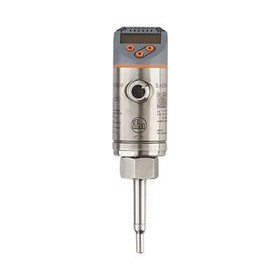

- Magnetic flow sensors: These sensors use the principle of Faraday's law to measure the flow rate of a liquid.
- Ultrasonic flow sensors: These sensors use ultrasonic waves to measure the flow rate of a liquid.
- Turbine flow sensors: These sensors use a turbine to measure the flow rate of a liquid.
- Vortex flow sensors: These sensors use the principle of the Von Karman vortex street to measure the flow rate of a liquid.
- Thermal flow sensors: These sensors use the principle of thermal conductivity to measure the flow rate of a gas.
- Differential pressure flow sensors: These sensors measure the pressure drop across a restriction in a flow path to determine the flow rate of a liquid or gas.
- Positive displacement flow sensors: These sensors measure the volume of liquid or gas passing through a flow path by metering it in small, fixed increments.
- Industrial manufacturing: Flow sensors are used in industrial manufacturing to measure the flow rate of liquids and gases in production processes. This helps to ensure that the production process is running efficiently and that the products being produced are of consistent quality.
- Automotive industry: Flow sensors are used in automotive applications to measure the flow rate of air, fuel, and other fluids in engines. This helps to optimize engine performance and improve fuel efficiency.
- Medical equipment: Flow sensors are used in medical equipment such as ventilators and anesthesia machines to measure the flow rate of gases and ensure that patients are receiving the correct amount of oxygen or other gases.
- Environmental monitoring: Flow sensors are used in environmental monitoring applications to measure the flow rate of water in rivers and streams, as well as in wastewater treatment plants to ensure that the treatment process is working efficiently.
- HVAC systems: Flow sensors are used in heating, ventilation, and air conditioning (HVAC) systems to measure the flow rate of air and ensure that the system is providing adequate cooling or heating to the building.
- Flow sensors are used in a variety of applications, from measuring the flow of liquids and gases in industrial processes to monitoring water usage in households. Choosing the right flow sensor for a particular application requires consideration of several factors, including:
- Flow rate range: The flow sensor should be able to measure the expected flow rate range of the application. Some sensors have a limited flow range, while others can measure a wide range of flow rates.
- Fluid type: The type of fluid being measured affects the choice of flow sensor. Some sensors are designed for liquids, while others are designed for gases or steam. The fluid properties, such as viscosity, density, and conductivity, also play a role in sensor selection.
- Pressure and temperature: The flow sensor should be able to operate within the expected pressure and temperature range of the application. Some sensors are designed for high-pressure and high-temperature applications, while others are not.
- Accuracy and repeatability: The accuracy and repeatability of the flow sensor are important factors to consider. The level of accuracy required depends on the application, and some sensors are more accurate than others.
- Installation requirements: The installation requirements of the flow sensor should be considered. Some sensors require a specific orientation or mounting position, while others can be installed in any orientation.
- Maintenance requirements: The maintenance requirements of the flow sensor should also be considered. Some sensors require regular cleaning or calibration, while others do not.
- Cost: The cost of the flow sensor is an important factor to consider. Some sensors are more expensive than others, and the cost should be weighed against the benefits of the sensor for the specific application.
- The accuracy of flow sensors can vary depending on the type of sensor and the application. Some flow sensors can have an accuracy of up to ±0.5%, while others may have an accuracy of ±5% or higher. Factors that can affect accuracy include the flow rate, fluid properties, and sensor design.
- Precision is also important when using flow sensors, as it determines the consistency and reliability of the measurements. Precision can be affected by factors such as sensor resolution, signal noise, and environmental conditions. High-precision flow sensors can have a repeatability of up to ±0.1%, while lower precision sensors may have a repeatability of ±1% or higher.
- Orientation: Flow sensors have a preferred orientation for installation, so it is important to follow the manufacturer's instructions. In general, the flow direction should be parallel to the flow sensor axis.
- Pipe diameter: Flow sensors are designed to work with specific pipe diameters, so it is important to select a sensor that matches the size of the pipe.
- Installation location: Flow sensors should be installed in a location that allows for accurate flow measurement. This may require a straight section of pipe before and after the sensor to eliminate turbulence and ensure a steady flow.
- Electrical requirements: Flow sensors require power to operate, so it is important to ensure that the installation location has a power source available.
- Calibration: Flow sensors may require calibration to ensure accuracy. This should be performed according to the manufacturer's instructions and may require specialized equipment.
- Gather the necessary equipment: You will need a flow meter, a calibration fluid, a calibration stand or rig, and a computer or device to record data.
- Set up the calibration stand: The stand should be set up to simulate the flow conditions of your application. This may involve adjusting the pressure, temperature, and flow rate of the calibration fluid.
- Connect the flow sensor: Connect the flow sensor to the calibration stand and ensure that it is properly secured.
- Record the initial readings: Take initial readings from the flow sensor and record them.
- Adjust the sensor: Adjust the sensor to match the flow rate of the calibration fluid. This may involve adjusting the sensor's sensitivity or zero point.
- Record the final readings: Take final readings from the flow sensor and record them.
- Compare the readings: Compare the initial and final readings to ensure that the flow sensor has been properly calibrated.
- Repeat if necessary: If the readings are not within an acceptable range, repeat the calibration process until the sensor is accurately calibrated.
Flow Sensor Costs and Supplier Insights
If you are looking to buy a Flow Sensor for sale, suppliers on IndustrySearch include Pacific Sensor Technologies Pty Ltd
Why choose a supplier in Melbourne for Flow Sensor Quotes?
If you are in Melbourne and considering purchasing a Flow Sensor, it's worth considering Melbourne-based suppliers. Doing so offers several benefits that are particularly relevant to businesses in the area. Here are the top reasons why opting for a local Melbourne supplier can be the best decision for your Flow Sensor buying needs.
Reliable Flow Sensor Products from Melbourne SuppliersRely on dependable Flow Sensor products from Melbourne suppliers. Their commitment to excellence guarantees satisfaction and performance.
Partner with Melbourne Suppliers for ComplianceChoose local suppliers as your compliance partners. Their expertise ensures that all products meet local regulations, giving you peace of mind.
Buying in Melbourne and Strengthen Your NetworkStrengthen your local business network by buying Flow Sensor in Melbourne. Connect with other businesses and foster community ties through local transactions.
Support Melbourne's Economy by Buying LocallyBoost Melbourne's economy and foster community development by purchasing from local suppliers.
Benefit from Melbourne Supplier ExpertiseEnhance your Flow Sensor's functionality with cutting-edge customisations. Tailored enhancements drive better business outcomes.
Economical Purchasing in MelbourneMake economical decisions by purchasing your Flow Sensor from Melbourne. Save on transport and import duties, reducing overall procurement costs.
Buy a Flow Sensor Near Me

 Reach valuable industrial buyers in minutes
 Promote key products & content
 Drive cost effective & measurable sales