
Flow Sensor in Sydney

Join industrial buyers comparing supplier quotes and buying with confidence. Free, quick and easy.
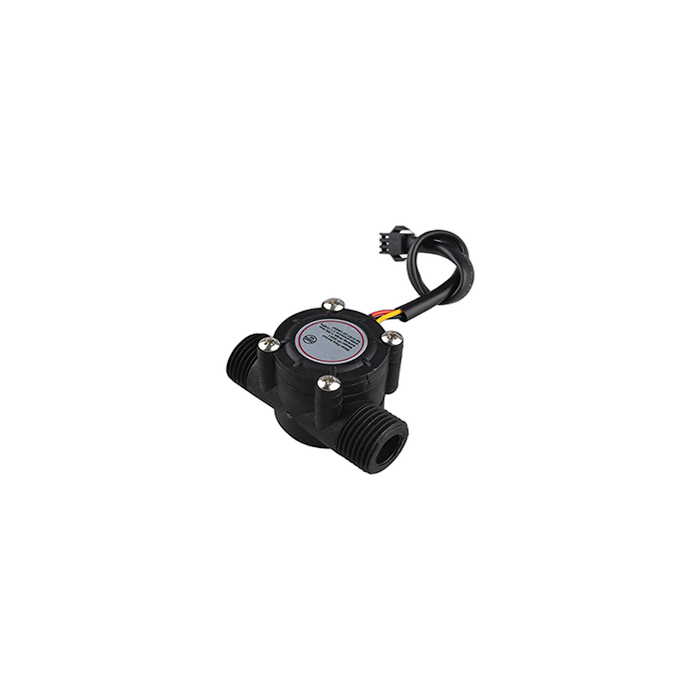



How IndustrySearch works
Tell us what you need
Answer a few quick questions about the equipment you're looking for.
Get personalised quotes
Receive tailored quotes from relevant Australian suppliers.
Compare and choose
Compare quotes, ask questions and choose the best option for you.
 Save time
 Compare quotes
 Buy with confidence
Save time, compare quotes & buy with confidence
Flow Sensor Suppliers in Sydney
Control Components is an Flow Sensor supplier to Sydney
Control Components imports, locally manufactures and distributes sensors used in process control systems and equipment manufacturing. Applications include: • Flow, Level, Pressure and Water / Wastewater sensors • Mining, water / wastewater treatment, process control, chemical, food, oil / gas / petrochemical, manufacturing & marine industries Most brands are exclusively ...Customers: Mining, Municipal Water / Wastewater, Defence, Marine shipping, Aviation / Rocket OEMs & m

First-Sensor is an Flow Sensor supplier to Sydney
Sensortechnics is a leading manufacturer and distributor of a wide range of sensors and fluid control devices. The product portfolio includes basic pressure sensors, rugged transmitters, submersible level sensors and customised pressure sensing systems from 1 mbar up to 1000 bar as well as liquid level switches, oxygen, flow and force sensors. Additionally, Sensortechnics ...

Treotham Automation is an Flow Sensor supplier to Sydney
Treotham Automation is a leading supplier of high quality components and products to industrial markets. As the exclusive distributor for the many international product lines, Treotham's customers gain from our local presence and the extensive knowledge and experience of our staff. We keep most of the more popular items in stock and these are usually available for immediate ...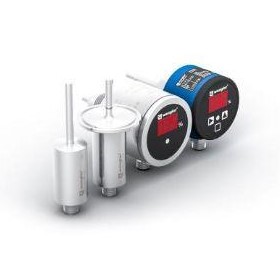

Compressed Air Technology is an Flow Sensor supplier to Sydney
Compressed Air Technology are specialist consultants and contractors for the compressed air industry. Working with industrial compressed air operators to maximise efficiency, reliability and productivity. We design, supply, install, monitor and certify compressed air systems for a wide range of industries Australia wide. The company has invested heavily in specialist measurement, ...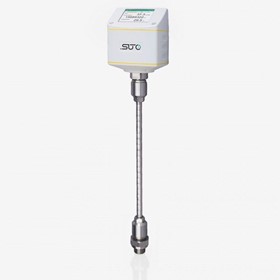
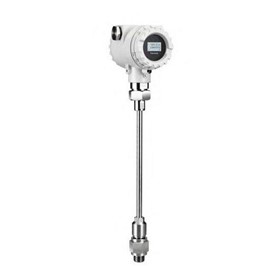

RS Components is an Flow Sensor supplier to Sydney
RS Components is your one stop distributor for electrical, industrial, automation & control gear, electronics, test & measurement, safety and more - with over 600,000 products from more than 2,500 leading global suppliers including RS PRO, Fluke, TE Connectivity, Phoenix Contact, Schneider, Siemens, ABB, Omron, Harting and more. With free delivery for orders over $125 excl. ...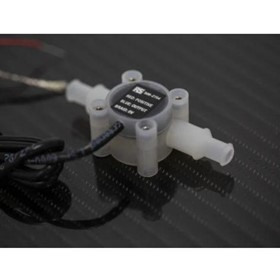

- Magnetic flow sensors: These sensors use the principle of Faraday's law to measure the flow rate of a liquid.
- Ultrasonic flow sensors: These sensors use ultrasonic waves to measure the flow rate of a liquid.
- Turbine flow sensors: These sensors use a turbine to measure the flow rate of a liquid.
- Vortex flow sensors: These sensors use the principle of the Von Karman vortex street to measure the flow rate of a liquid.
- Thermal flow sensors: These sensors use the principle of thermal conductivity to measure the flow rate of a gas.
- Differential pressure flow sensors: These sensors measure the pressure drop across a restriction in a flow path to determine the flow rate of a liquid or gas.
- Positive displacement flow sensors: These sensors measure the volume of liquid or gas passing through a flow path by metering it in small, fixed increments.
- Industrial manufacturing: Flow sensors are used in industrial manufacturing to measure the flow rate of liquids and gases in production processes. This helps to ensure that the production process is running efficiently and that the products being produced are of consistent quality.
- Automotive industry: Flow sensors are used in automotive applications to measure the flow rate of air, fuel, and other fluids in engines. This helps to optimize engine performance and improve fuel efficiency.
- Medical equipment: Flow sensors are used in medical equipment such as ventilators and anesthesia machines to measure the flow rate of gases and ensure that patients are receiving the correct amount of oxygen or other gases.
- Environmental monitoring: Flow sensors are used in environmental monitoring applications to measure the flow rate of water in rivers and streams, as well as in wastewater treatment plants to ensure that the treatment process is working efficiently.
- HVAC systems: Flow sensors are used in heating, ventilation, and air conditioning (HVAC) systems to measure the flow rate of air and ensure that the system is providing adequate cooling or heating to the building.
- Flow sensors are used in a variety of applications, from measuring the flow of liquids and gases in industrial processes to monitoring water usage in households. Choosing the right flow sensor for a particular application requires consideration of several factors, including:
- Flow rate range: The flow sensor should be able to measure the expected flow rate range of the application. Some sensors have a limited flow range, while others can measure a wide range of flow rates.
- Fluid type: The type of fluid being measured affects the choice of flow sensor. Some sensors are designed for liquids, while others are designed for gases or steam. The fluid properties, such as viscosity, density, and conductivity, also play a role in sensor selection.
- Pressure and temperature: The flow sensor should be able to operate within the expected pressure and temperature range of the application. Some sensors are designed for high-pressure and high-temperature applications, while others are not.
- Accuracy and repeatability: The accuracy and repeatability of the flow sensor are important factors to consider. The level of accuracy required depends on the application, and some sensors are more accurate than others.
- Installation requirements: The installation requirements of the flow sensor should be considered. Some sensors require a specific orientation or mounting position, while others can be installed in any orientation.
- Maintenance requirements: The maintenance requirements of the flow sensor should also be considered. Some sensors require regular cleaning or calibration, while others do not.
- Cost: The cost of the flow sensor is an important factor to consider. Some sensors are more expensive than others, and the cost should be weighed against the benefits of the sensor for the specific application.
- The accuracy of flow sensors can vary depending on the type of sensor and the application. Some flow sensors can have an accuracy of up to ±0.5%, while others may have an accuracy of ±5% or higher. Factors that can affect accuracy include the flow rate, fluid properties, and sensor design.
- Precision is also important when using flow sensors, as it determines the consistency and reliability of the measurements. Precision can be affected by factors such as sensor resolution, signal noise, and environmental conditions. High-precision flow sensors can have a repeatability of up to ±0.1%, while lower precision sensors may have a repeatability of ±1% or higher.
- Orientation: Flow sensors have a preferred orientation for installation, so it is important to follow the manufacturer's instructions. In general, the flow direction should be parallel to the flow sensor axis.
- Pipe diameter: Flow sensors are designed to work with specific pipe diameters, so it is important to select a sensor that matches the size of the pipe.
- Installation location: Flow sensors should be installed in a location that allows for accurate flow measurement. This may require a straight section of pipe before and after the sensor to eliminate turbulence and ensure a steady flow.
- Electrical requirements: Flow sensors require power to operate, so it is important to ensure that the installation location has a power source available.
- Calibration: Flow sensors may require calibration to ensure accuracy. This should be performed according to the manufacturer's instructions and may require specialized equipment.
- Gather the necessary equipment: You will need a flow meter, a calibration fluid, a calibration stand or rig, and a computer or device to record data.
- Set up the calibration stand: The stand should be set up to simulate the flow conditions of your application. This may involve adjusting the pressure, temperature, and flow rate of the calibration fluid.
- Connect the flow sensor: Connect the flow sensor to the calibration stand and ensure that it is properly secured.
- Record the initial readings: Take initial readings from the flow sensor and record them.
- Adjust the sensor: Adjust the sensor to match the flow rate of the calibration fluid. This may involve adjusting the sensor's sensitivity or zero point.
- Record the final readings: Take final readings from the flow sensor and record them.
- Compare the readings: Compare the initial and final readings to ensure that the flow sensor has been properly calibrated.
- Repeat if necessary: If the readings are not within an acceptable range, repeat the calibration process until the sensor is accurately calibrated.
Flow Sensor Costs and Supplier Insights
If you are looking to buy a Flow Sensor for sale, suppliers on IndustrySearch include Control Components
Why choose a supplier in Sydney for Flow Sensor Quotes?
If you are in Sydney and considering purchasing a Flow Sensor, it's worth considering Sydney-based suppliers. Doing so offers several benefits that are particularly relevant to businesses in the area. Here are the top reasons why opting for a local Sydney supplier can be the best decision for your Flow Sensor buying needs.
Build Community through Local PurchasesBuild lasting relationships by choosing local Flow Sensor suppliers in Sydney. Your business becomes a contributor to the local economy.
Support Local Industry with Flow Sensor PurchasesSupport local industry and commerce by choosing Flow Sensor from Sydney. Every purchase helps sustain and grow the local business ecosystem.
Reliable Flow Sensor Products from Sydney SuppliersRely on dependable Flow Sensor products from Sydney suppliers. Their commitment to excellence guarantees satisfaction and performance.
Sydney Providers Leading Innovation AdoptionChoose Sydney Flow Sensor providers leading in innovation adoption. They help you implement the latest industry trends swiftly, enhancing your operational capacity.
Minimising Downtime with Quick DeliveriesMinimise operational downtime with faster Flow Sensor deliveries from Sydney. Rapid supply keeps your business moving without interruption.
Streamlined ComplianceStreamline your compliance efforts by purchasing Flow Sensor from Sydney. Local suppliers understand local legal landscapes, making compliance straightforward.
Buy a Flow Sensor Near Me

 Reach valuable industrial buyers in minutes
 Promote key products & content
 Drive cost effective & measurable sales