
Turbidity Meter & Sensor in Perth

Join industrial buyers comparing supplier quotes and buying with confidence. Free, quick and easy.



How IndustrySearch works
Tell us what you need
Answer a few quick questions about the equipment you're looking for.
Get personalised quotes
Receive tailored quotes from relevant Australian suppliers.
Compare and choose
Compare quotes, ask questions and choose the best option for you.
 Save time
 Compare quotes
 Buy with confidence
Save time, compare quotes & buy with confidence
Turbidity Meter & Sensor Suppliers in Perth
Mettler Toledo is an Turbidity Meter & Sensor supplier to All
We offer precision instruments and services for many applications in research and development, quality control, production, logistics and retail to customers around the world. Our precision instruments are the foundation of research and quality control labs all over the world. Also, our analytical balances, titrators, pH meters, density meters, refractometers, melting point ...
Turbidity Meter & Sensor | Transmitter M800 Process 1-CH

Turbidity Meter & Sensor | Transmitter M800 Process 1-CH SS

Hinco Instruments is an Turbidity Meter & Sensor supplier to Perth
Hinco Instruments is a leading supplier of industrial process control and test and measurement instruments to industry throughout Western Australia. As a WA owned & operated business with 60 years of service to WA industry we have a huge portfolio of experience to draw from. We are the exclusive Western Australian distributor for Royce Water Technologies.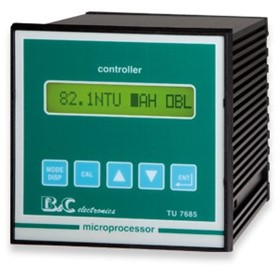
Online Turbidity Analyser - B&C Electronics - TU7685

Thermo Scientific Turbidity Meter & Sensor | TN100

- Turbidity can also affect the taste and odor of drinking water and can make it difficult to effectively disinfect water with chlorine. Therefore, it is important to measure turbidity in water treatment plants, industrial processes, and natural bodies of water to ensure that the water is safe for consumption and supports aquatic life.
- Nephelometric turbidity meter: This type of meter uses a light source and a detector to measure the scattered light. The amount of scattered light is directly proportional to the turbidity of the liquid.
- Ratio turbidity meter: This type of meter uses two light sources with different wavelengths to measure the ratio of the scattered light. This method is more accurate than the nephelometric method.
- Absorption turbidity meter: This type of meter measures the amount of light absorbed by the suspended particles in the liquid. It is less accurate than the other two methods, but it is useful for measuring high levels of turbidity.
- In-line turbidity sensor: This type of sensor is installed in the pipeline or tank and continuously measures the turbidity of the liquid. It is often used in water treatment plants and food processing industries.
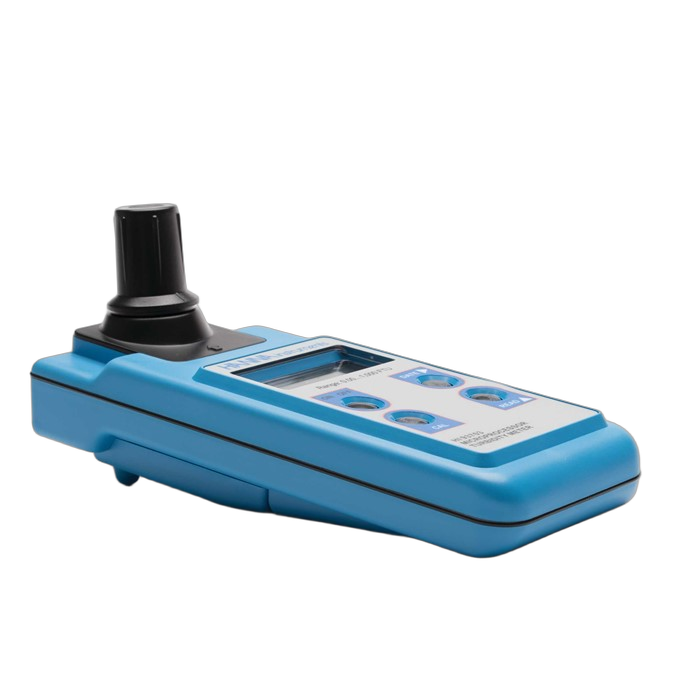
- Portable turbidity meter: This type of meter is handheld and can be used to measure the turbidity of liquids in the field. It is useful for environmental monitoring and water quality testing.
- Light source: The quality and intensity of the light source can affect the accuracy of the turbidity meter. If the light source is too weak, the meter may not be able to accurately detect small particles in the liquid.
- Calibration: Turbidity meters need to be calibrated regularly to ensure accurate measurements. If the instrument is not calibrated correctly, the readings may be inaccurate.
- Sample preparation: The sample being tested needs to be properly prepared to ensure accurate readings. If the sample is not properly mixed or filtered, it may contain particles that can interfere with the accuracy of the measurement.
- Temperature: The temperature of the liquid being tested can affect the accuracy of the turbidity meter. If the temperature is too high or too low, it can affect the readings.
- Interference: Other substances in the liquid being tested can interfere with the accuracy of the turbidity meter. For example, dissolved solids or chemicals can scatter the light and make it difficult to accurately measure the level of turbidity.
- The calibration requirements for turbidity meters depend on the type of instrument and the manufacturer's instructions. Generally, turbidity meters are calibrated using formazin, a standard solution with a known turbidity value. The meter is adjusted until it reads the same value as the standard solution.
- The frequency of calibration depends on the application and the level of accuracy required. In general, turbidity meters used in water treatment plants and other critical applications should be calibrated daily or weekly, depending on the manufacturer's recommendations. In contrast, laboratory instruments used for research or non-critical applications may only require calibration every few months or even once a year.
- Keep the sensor clean: The sensor should be cleaned regularly to remove any debris or buildup that may affect the readings. Use a soft cloth or a brush to clean the sensor gently.
- Calibrate the meter regularly: Calibration ensures that the meter is providing accurate readings. The frequency of calibration depends on the manufacturer's recommendations, but typically it is recommended to calibrate the meter at least once a month.
- Replace the sensor: The sensor may need to be replaced periodically. The frequency of replacement depends on the manufacturer's recommendations and the frequency of use. A general rule of thumb is to replace the sensor every one to two years.
- Check the batteries: If the meter is battery-powered, check the batteries regularly to ensure they are working properly. Replace the batteries as needed.
- Store the meter properly: When not in use, store the meter in a cool, dry place. Avoid exposing the meter to extreme temperatures or humidity.
Turbidity Meter & Sensor Costs and Supplier Insights
If you are looking to buy a Turbidity Meter & Sensor for sale, suppliers on IndustrySearch include Mettler Toledo
Why choose a supplier in Perth for Turbidity Meter & Sensor Quotes?
If you are in Perth and considering purchasing a Turbidity Meter & Sensor, it's worth considering Perth-based suppliers. Doing so offers several benefits that are particularly relevant to businesses in the area. Here are the top reasons why opting for a local Perth supplier can be the best decision for your Turbidity Meter & Sensor buying needs.
Cost-Effective Turbidity Meter & Sensor SolutionsFind cost-effective Turbidity Meter & Sensor solutions when you buy from suppliers in locally. Local sourcing eliminates many hidden costs associated with international shipping.
Streamlined Logistics with Perth SuppliersStreamline your Turbidity Meter & Sensor logistics. Simplify your supply chain management with local sources.
Superior Standards with Perth ExpertiseBenefit from superior Turbidity Meter & Sensor standards provided by Perth suppliers. Their expertise ensures products are built to last and perform exceptionally.
Stay Ahead in Turbidity Meter & Sensor TechnologyStay ahead in Turbidity Meter & Sensor technology with the help of local suppliers. They bring the newest advancements directly to your doorstep, keeping you competitive.
Streamlined ComplianceStreamline your compliance efforts by purchasing Turbidity Meter & Sensor from Perth. Local suppliers understand local legal landscapes, making compliance straightforward.
Innovative Turbidity Meter & Sensor DesignsExplore innovative Turbidity Meter & Sensor designs offered by Perth's creative suppliers. Custom designs can significantly improve your operational efficiency.
Buy a Turbidity Meter & Sensor Near Me
Turbidity Meter & Sensor for sale in Perth
Turbidity Meter & Sensor for sale in Adelaide
Turbidity Meter & Sensor for sale in Sydney
Turbidity Meter & Sensor for sale in Hobart
Turbidity Meter & Sensor for sale in Brisbane
Turbidity Meter & Sensor for sale in Darwin

 Reach valuable industrial buyers in minutes
 Promote key products & content
 Drive cost effective & measurable sales