
Wire Feeder in Darwin

Join industrial buyers comparing supplier quotes and buying with confidence. Free, quick and easy.

How IndustrySearch works
Tell us what you need
Answer a few quick questions about the equipment you're looking for.
Get personalised quotes
Receive tailored quotes from relevant Australian suppliers.
Compare and choose
Compare quotes, ask questions and choose the best option for you.
 Save time
 Compare quotes
 Buy with confidence
Save time, compare quotes & buy with confidence
Wire Feeder - MIG & TIG Welder Suppliers in Darwin

Totalweld is an Wire Feeder supplier to Darwin
Totalweld is a family owned and operated Territory business that strives to provide welding supplies to the Territory community. Whether you’re looking for that specific handy tool or needing expert advice, equipment or assistance with your welding projects at an affordable price, Totalweld have the lot! For more than 15 years Totalweld has been one of the leading Territory ...

Wilson's Industrial Sales is an Wire Feeder supplier to All
Wilson’s Industrial Sales was founded in 1964 by well-known Bundaberg local identity Mr Noel Wilson in small premises on the corner of Targo and Woondooma Streets. The business rapidly expanded with sound management, culminating in relocation to the present, much larger, Quay and Walla Streets site in 1972. After the move, Wilsons Enterprises (as it was known then) continued ...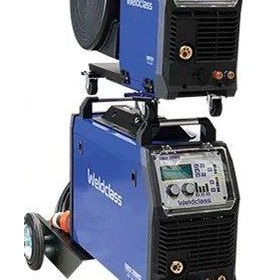

- The benefits of using a wire feeder include:
- Improved accuracy: A wire feeder ensures that the wire is fed at a consistent rate, which helps to maintain a steady welding arc and improves the accuracy of the welding process.
- Increased productivity: By automating the wire feeding process, a wire feeder can help welders complete jobs faster and with less effort, leading to increased productivity.
- Reduced waste: A wire feeder can help reduce wire waste by ensuring that the wire is fed at the right rate and minimizing the chances of it getting tangled or bent.
- Improved safety: A wire feeder can help improve safety by reducing the need for welders to handle the wire manually, which can be dangerous if not done properly.
- Voltage Sensing Feeders: These wire feeders are designed to sense the arc voltage and adjust the wire speed accordingly. They are ideal for welding applications where the arc length may vary.
- Constant Speed Feeders: These wire feeders maintain a constant wire speed, regardless of the arc voltage. They are suitable for welding applications where a consistent weld bead is required.
- Dual Drive Feeders: These wire feeders have two drive rolls that provide better control over the wire feed speed. They are ideal for welding applications that require high precision.
- Synergic Feeders: These wire feeders have a built-in microprocessor that automatically adjusts the wire feed speed based on the welding parameters. They are ideal for welding applications that require a high level of automation.
- Wire size compatibility: Make sure that the wire feeder is compatible with the wire size that you will be using. This is typically expressed in terms of wire diameter.
- Wire feed speed: Look for a wire feeder that offers a wide range of wire feed speeds. This will give you greater control over the welding process, and will help you to achieve the best results.
- Voltage control: Some wire feeders offer voltage control, which allows you to adjust the voltage to match the welding conditions. This can be very useful for achieving the right balance between penetration and weld appearance.
- Duty cycle: The duty cycle of a wire feeder is the amount of time it can operate continuously before it needs to cool down. Look for a wire feeder with a high duty cycle, especially if you will be doing long welding sessions.
- Ease of use: Look for a wire feeder that is easy to set up and use. This will save you time and frustration, and will help you to get the most out of your welding equipment.
- Durability: Look for a wire feeder that is built to last. This will ensure that you get many years of use out of your investment.
- Solid wire: This is the most commonly used wire type for welding with a wire feeder. It is made of a solid metal core and is used for a variety of welding applications, including MIG welding.
- Flux-cored wire: This type of wire has a flux coating that melts and creates a gas shield to protect the weld pool. It is commonly used for welding in outdoor environments or where there is a lot of wind.
- Metal-cored wire: This type of wire has a metal core that is filled with metal powders and alloys. It is used for welding thicker materials and for welding in high-production environments.
- Aluminum wire: This type of wire is used for welding aluminum and aluminum alloys. It requires a different type of wire feeder and welding process than other types of wire.
- Stainless steel wire: This type of wire is used for welding stainless steel and is available in both solid and flux-cored varieties.
- Nickel wire: This type of wire is used for welding nickel and nickel alloys. It is commonly used in the aerospace and nuclear industries.
- Consider the welding application: The type of welding application you are performing will determine the size of wire feeder you need. For heavy-duty applications such as shipbuilding, bridge construction, or structural steel fabrication, you will need a larger wire feeder that can handle higher amperages and larger diameter wires.
- Determine the material thickness: The thickness of the material you are welding also plays a role in choosing the right size of wire feeder. If you are welding thin materials, you can use a smaller wire feeder.
- Choose the right type of wire: The type of wire you are using also affects the size of wire feeder you need. For example, if you are using a flux-cored wire, you may need a larger wire feeder because it requires more amperage than a solid wire.
- Determine the amperage: The amperage of your welding machine will determine the size of wire feeder you need. If you have a high amperage welding machine, you will need a larger wire feeder that can handle the increased power.
Wire Feeder Costs and Supplier Insights
Why choose a supplier in Darwin for Wire Feeder Quotes?
If you are in Darwin and considering purchasing a Wire Feeder, it's worth considering Darwin-based suppliers. Doing so offers several benefits that are particularly relevant to businesses in the area. Here are the top reasons why opting for a local Darwin supplier can be the best decision for your Wire Feeder buying needs.
Immediate Assistance in DarwinEnjoy immediate assistance and troubleshooting in Darwin. Fast resolution keeps your operations running smoothly.
Innovative Wire Feeder DesignsExplore innovative Wire Feeder designs offered by Darwin's creative suppliers. Custom designs can significantly improve your operational efficiency.
Support Local Industry with Wire Feeder PurchasesSupport local industry and commerce by choosing Wire Feeder from Darwin. Every purchase helps sustain and grow the local business ecosystem.
Access to Wire Feeder Training Experts in DarwinGain direct access to Wire Feeder training experts. Local suppliers can provide tailored instruction that fits your specific needs and challenges.
Quality from Trusted Darwin SuppliersExpect high-quality Wire Feeder from trusted suppliers. Local suppliers adhere to strict Australian standards, ensuring top-tier products.
Budget with Local Wire Feeder SuppliersStreamline your budget by choosing local Wire Feeder suppliers. Efficient logistics and reduced overheads lead to cost-effective purchasing.
Buy a Wire Feeder Near Me
Wire Feeder Articles & Reviews


 Reach valuable industrial buyers in minutes
 Promote key products & content
 Drive cost effective & measurable sales