
Wire Feeder in Perth

Join industrial buyers comparing supplier quotes and buying with confidence. Free, quick and easy.
How IndustrySearch works
Tell us what you need
Answer a few quick questions about the equipment you're looking for.
Get personalised quotes
Receive tailored quotes from relevant Australian suppliers.
Compare and choose
Compare quotes, ask questions and choose the best option for you.
 Save time
 Compare quotes
 Buy with confidence
Save time, compare quotes & buy with confidence
Wire Feeder - MIG & TIG Welder Suppliers in Perth

Gentronics is an Wire Feeder supplier to Perth
Is your company involved in Engineering and Construction? Mining, Oil and Gas? Shipbuilding or Pipelines? Gentronics has been helping industries just like yours since 1982 to obtain the best price and choose from the largest selection of welding products, consumables and industrial supplies to help you complete your next project. If you require anything related to Welding ...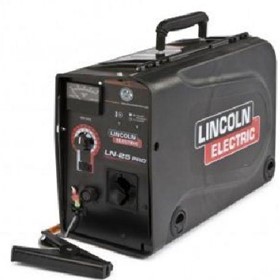
Lincoln LN-25 PRO Wire Feeder + K126 Weld LIWK26135A1
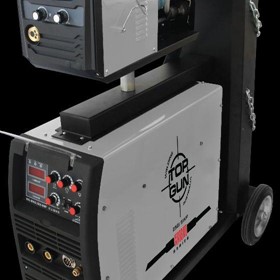
Top Gun 252I Seperate Wire-Feeder Mig welder TGWMIG252ISWF

Wilson's Industrial Sales is an Wire Feeder supplier to All
Wilson’s Industrial Sales was founded in 1964 by well-known Bundaberg local identity Mr Noel Wilson in small premises on the corner of Targo and Woondooma Streets. The business rapidly expanded with sound management, culminating in relocation to the present, much larger, Quay and Walla Streets site in 1972. After the move, Wilsons Enterprises (as it was known then) continued ...

- The benefits of using a wire feeder include:
- Improved accuracy: A wire feeder ensures that the wire is fed at a consistent rate, which helps to maintain a steady welding arc and improves the accuracy of the welding process.
- Increased productivity: By automating the wire feeding process, a wire feeder can help welders complete jobs faster and with less effort, leading to increased productivity.
- Reduced waste: A wire feeder can help reduce wire waste by ensuring that the wire is fed at the right rate and minimizing the chances of it getting tangled or bent.
- Improved safety: A wire feeder can help improve safety by reducing the need for welders to handle the wire manually, which can be dangerous if not done properly.
- Voltage Sensing Feeders: These wire feeders are designed to sense the arc voltage and adjust the wire speed accordingly. They are ideal for welding applications where the arc length may vary.
- Constant Speed Feeders: These wire feeders maintain a constant wire speed, regardless of the arc voltage. They are suitable for welding applications where a consistent weld bead is required.
- Dual Drive Feeders: These wire feeders have two drive rolls that provide better control over the wire feed speed. They are ideal for welding applications that require high precision.
- Synergic Feeders: These wire feeders have a built-in microprocessor that automatically adjusts the wire feed speed based on the welding parameters. They are ideal for welding applications that require a high level of automation.
- Wire size compatibility: Make sure that the wire feeder is compatible with the wire size that you will be using. This is typically expressed in terms of wire diameter.
- Wire feed speed: Look for a wire feeder that offers a wide range of wire feed speeds. This will give you greater control over the welding process, and will help you to achieve the best results.
- Voltage control: Some wire feeders offer voltage control, which allows you to adjust the voltage to match the welding conditions. This can be very useful for achieving the right balance between penetration and weld appearance.
- Duty cycle: The duty cycle of a wire feeder is the amount of time it can operate continuously before it needs to cool down. Look for a wire feeder with a high duty cycle, especially if you will be doing long welding sessions.
- Ease of use: Look for a wire feeder that is easy to set up and use. This will save you time and frustration, and will help you to get the most out of your welding equipment.
- Durability: Look for a wire feeder that is built to last. This will ensure that you get many years of use out of your investment.
- Solid wire: This is the most commonly used wire type for welding with a wire feeder. It is made of a solid metal core and is used for a variety of welding applications, including MIG welding.
- Flux-cored wire: This type of wire has a flux coating that melts and creates a gas shield to protect the weld pool. It is commonly used for welding in outdoor environments or where there is a lot of wind.
- Metal-cored wire: This type of wire has a metal core that is filled with metal powders and alloys. It is used for welding thicker materials and for welding in high-production environments.
- Aluminum wire: This type of wire is used for welding aluminum and aluminum alloys. It requires a different type of wire feeder and welding process than other types of wire.
- Stainless steel wire: This type of wire is used for welding stainless steel and is available in both solid and flux-cored varieties.
- Nickel wire: This type of wire is used for welding nickel and nickel alloys. It is commonly used in the aerospace and nuclear industries.
- Consider the welding application: The type of welding application you are performing will determine the size of wire feeder you need. For heavy-duty applications such as shipbuilding, bridge construction, or structural steel fabrication, you will need a larger wire feeder that can handle higher amperages and larger diameter wires.
- Determine the material thickness: The thickness of the material you are welding also plays a role in choosing the right size of wire feeder. If you are welding thin materials, you can use a smaller wire feeder.
- Choose the right type of wire: The type of wire you are using also affects the size of wire feeder you need. For example, if you are using a flux-cored wire, you may need a larger wire feeder because it requires more amperage than a solid wire.
- Determine the amperage: The amperage of your welding machine will determine the size of wire feeder you need. If you have a high amperage welding machine, you will need a larger wire feeder that can handle the increased power.
Wire Feeder Costs and Supplier Insights
Why choose a supplier in Perth for Wire Feeder Quotes?
If you are in Perth and considering purchasing a Wire Feeder, it's worth considering Perth-based suppliers. Doing so offers several benefits that are particularly relevant to businesses in the area. Here are the top reasons why opting for a local Perth supplier can be the best decision for your Wire Feeder buying needs.
Cost-Effective Wire Feeder SolutionsFind cost-effective Wire Feeder solutions when you buy from suppliers in locally. Local sourcing eliminates many hidden costs associated with international shipping.
Local Expertise for Wire Feeder RepairsUtilise local expertise for Wire Feeder repairs in Perth. Expert technicians nearby mean less downtime and better maintenance.
Create More Jobs in PerthCreate and keep jobs in Perth by buying your Wire Feeder from local suppliers. You'll help the job market and support local families.
Benefit from Perth Supplier ExpertiseEnhance your Wire Feeder's functionality with cutting-edge customisations. Tailored enhancements drive better business outcomes.
Partner with Perth Suppliers for ComplianceChoose local suppliers as your compliance partners. Their expertise ensures that all products meet local regulations, giving you peace of mind.
Secure Your Inventory with Local SuppliersSecure your Wire Feeder inventory by partnering with local suppliers in Perth. Reduce the likelihood of stock shortages and logistical issues.
Buy a Wire Feeder Near Me
Wire Feeder Articles & Reviews


 Reach valuable industrial buyers in minutes
 Promote key products & content
 Drive cost effective & measurable sales