
Evident Dual Element Transducers | Evident ...
Evident - Dual Element Transducers | Evident Australia
Two angled elements create a V-shaped sound path in the test material. This "Pseudo-Focus" enhances resolution in the focal zone.
A dual element transducer consists of two crystal elements housed in the same case, separated by an acoustic barrier. One element transmits longitudinal waves, and the other element acts as a receiver.
Advantages:
- Improves near surface resolution
- Eliminates delay line multiples for high temperature applications
- Couples well on rough or curved surfaces
- Reduces direct back-scattering noise in coarse grained or scattering materials
- Combines penetration capabilities of a lower frequency single element transducer with the near surface resolution capabilities of a higher frequency single element transducer
- Can be contoured to conform to curved parts.
Applications:
- Remaining wall thickness measurement
- Corrosion/erosion monitoring
- Weld overlay and cladding bond/disbond inspection
- Detection of porosity, inclusions, cracks, and laminations in castings and forgings
- Crack detection in bolts or other cylindrical objects
- Maximum temperature capability is 800°F (425°C) for 5.0 MHz and below; 350°F (175°C) for 7.5 MHz and 10 MHz. Recommended duty cycle for surface temperatures from 200°F (90°C) to 800°F (425°C) is ten seconds maximum contact followed by a minimum of one minute air cooling (does not apply to Miniature Tip Dual)
DC1–DC5 Dual Element Corrosion Transducers
A Complete Corrosion Monitoring Toolbox for Pipeline and Tank Integrity
Evident DC series (DC1–DC5) dual element transducers provide inspectors with a complete corrosion monitoring toolbox to support pipeline and tank inspection. Optimized for corrosion and thin materials, the transducers work with a wide variety of NDT instruments and ultrasonic inspection procedures.
All models provide a cleaner signal than single element transducers and offer less ring down than comparable models—helpful for resolving smaller defects, inspecting close to the surface, and differentiating between two indications.
DC1 and DC2 Transducers: Tough and Versatile for Tank and Pipeline Inspection
With a 7.5 MHz frequency and slight roof angle, DC1 and DC2 dual element transducers provide optimal near-surface resolution in the range of 0.030 – 2 in. (0.76 – 50.8 mm) in steel.
Key benefits:
- Ideal for coverage of thin materials
- Excels at thickness measurement, corrosion mapping, and flaw sizing
- Available in standard (DC1) and thick-walled (DC2) housings
- Built to last even with frequent scrubbing due to thick-walled, wear-resistant housing (DC2)
- Effective on pipes as small as 1 in. (25.4 mm) OD
- Rated for elevated temperature pipe and tank inspections with a heat-resistant delay line up to 150 °C (300 °F)
- Fits into small spaces: low profile (18 mm high) and 0.455 in. (DC1)/0.56 in. tip diameter (DC2)
- Knurled case is easy to grip
- Broad compatibility with unmolded BNC or LEMO connectors
- Improved spring strain relief (BNC connector only) to minimize cable damag
DC3–DC5 Transducers: Inspect Thinner Materials and Go Beyond Corrosion Monitoring
The DC3, DC4, and DC5 dual element transducers expand your inspection capabilities. Thanks to 5 MHz frequencies and optimal element sizes/placement, inspectors can monitor corrosion of thinner material. The DC3 model with its high-angle design takes the series beyond corrosion monitoring and thickness measurement to include thin-wall pipe weld inspection and other applications, useful depth in steel of 0-0.6 in. (0-15.2 mm). DC4 and DC5 models offer optimal depth range in steel of 0.040-1.5 in. (1.02-38.1 mm).
DC3 Transducer: Fast Pipe Weld Testing and Thin-Wall Material Inspections
Built with a 5 MHz frequency and high-angle longitudinal wave, the DC3 dual element transducer provides optimal near-surface resolution for very thin materials ranging from 0–0.6 in. (0–15.24 mm).
Key Benefits:
- High-angle longitudinal wave: inspect thin material beyond corrosion monitoring
- Fast, reliable UT weld inspection tool for thin-wall pipes
- Can perform a high-speed manual weld inspection similar to comparable models
- Dual piezocomposite elements for increased energy
- Acoustic noise barrier for pitch-catch technology prevents crosstalk
- Fits into small spaces to inspect hard-to-access areas (e.g., boiler tubes)
- Integrated wedges make the transducer compact
- Microdot connectors work with various NDT instruments
Applications include:
- High-speed manual inspection of thin-wall pipelines, boiler tubes, and other thin components
- Planar flaw analysis and sizing
- Distinguishing weld root geometry from indications
- Pipeline long seam and girth weld inspection
- Boiler tube welds
- Pharmaceutical piping
- Heat exchanger tubing
- Thin-walled components in the nuclear industry
DC4 and DC5 Transducers: Optimized to Detect Flaws and Measure Thickness in Thin Materials
Manufactured at 5 MHz with slightly angled elements and a 0-degree longitudinal wave, the DC4 and DC5 dual element transducers offer enhanced thickness measurement and flaw detection in thin materials ranging from 0.040-1.5 in. (1.02-38.1 mm).
Key Benefits:
- Optimal near-surface resolution for thin materials
- Slight roof angle improves flaw detection and thickness measurement
- Replaceable wedges lengthen the transducer’s useful life
- Acoustic noise barrier for pitch-catch technology prevents crosstalk
- Microdot connectors work with various NDT instruments
To contact Evident Australia about Evident Dual Element Transducers | Evident Australia use Get a quote.
- Your delivery location?
- NSW
- VIC
- QLD
- SA
- WA
- NT
- ACT
- TAS
- New Zealand
- Papua New Guinea
- Afghanistan
- Albania
- Algeria
- Andorra
- Angola
- Antigua and Barbuda
- Argentina
- Armenia
- Austria
- Azerbaijan
- Bahamas
- Bahrain
- Bangladesh
- Barbados
- Belarus
- Belgium
- Belize
- Benin
- Bhutan
- Bolivia
- Bosnia and Herzegovina
- Botswana
- Brazil
- Brunei
- Bulgaria
- Burkina Faso
- Burma
- Burundi
- Cabo Verde
- Cambodia
- Cameroon
- Canada
- Central African Republic
- Chad
- Chile
- China
- Colombia
- Comoros
- Congo (Brazzaville)
- Congo (Kinshasa)
- Costa Rica
- Côte d'Ivoire
- Croatia
- Cuba
- Cyprus
- Czechia
- Denmark
- Djibouti
- Dominica
- Dominican Republic
- Ecuador
- Egypt
- El Salvador
- Equatorial Guinea
- Eritrea
- Estonia
- Ethiopia
- Fiji
- Finland
- France
- Gabon
- Gambia
- Georgia
- Germany
- Ghana
- Greece
- Grenada
- Guatemala
- Guinea
- Guinea-Bissau
- Guyana
- Haiti
- Holy See
- Honduras
- Hungary
- Iceland
- India
- Indonesia
- Iran
- Iraq
- Ireland
- Israel
- Italy
- Jamaica
- Japan
- Jordan
- Kazakhstan
- Kenya
- Kiribati
- Korea, North
- Korea, South
- Kosovo
- Kuwait
- Kyrgyzstan
- Laos
- Latvia
- Lebanon
- Lesotho
- Liberia
- Libya
- Liechtenstein
- Lithuania
- Luxembourg
- Macedonia
- Madagascar
- Malawi
- Malaysia
- Maldives
- Mali
- Malta
- Marshall Islands
- Mauritania
- Mauritius
- Mexico
- Federated States of Micronesia
- Moldova
- Monaco
- Mongolia
- Montenegro
- Morocco
- Mozambique
- Namibia
- Nauru
- Nepal
- Netherlands
- New Zealand
- Nicaragua
- Niger
- Nigeria
- Norway
- Oman
- Pakistan
- Palau
- Panama
- Papua New Guinea
- Paraguay
- Peru
- Philippines
- Poland
- Portugal
- Qatar
- Romania
- Russia
- Rwanda
- Saint Kitts and Nevis
- Saint Lucia
- Saint Vincent and the Grenadines
- Samoa
- San Marino
- Sao Tome and Principe
- Saudi Arabia
- Senegal
- Serbia
- Seychelles
- Sierra Leone
- Singapore
- Slovakia
- Slovenia
- Solomon Islands
- Somalia
- South Africa
- South Sudan
- Spain
- Sri Lanka
- Sudan
- Suriname
- Swaziland
- Sweden
- Switzerland
- Syria
- Taiwan
- Tajikistan
- Tanzania
- Thailand
- Timor-Leste
- Togo
- Tonga
- Trinidad and Tobago
- Tunisia
- Turkey
- Turkmenistan
- Tuvalu
- Uganda
- Ukraine
- United Arab Emirates
- United Kingdom
- United States
- Uruguay
- Uzbekistan
- Vanuatu
- Venezuela
- Vietnam
- Yemen
- Zambia
- Zimbabwe
Benchtop XRF Analyzer | Evident Vanta GX
Thickness Gauge 0.08 mm to 635 mm | 39DL PLUS
Thickness Gauge 0.080 mm to 635 mm | 45MG
Handheld XRF Analyzer IP54 Rated | Vanta Element
Handheld XRF Analyzer 55 kV Tungsten | Vanta Max
Thickness Gauge Range up to 25.4 mm | Magna-Mike 8600
Thickness Gauge 0.50 mm to 635 mm | 27MG
Thickness Gauge 0.63 mm to 22.8 mm | 35RDC
Thickness Gauge High-resolution Touch Screen | 72DL PLUS
Ultrasonic Flaw Detector IP66/67 | EPOCH 650
Ultrasonic Flaw Detector IP65/67 | EPOCH 6LT
Ultrasonic Flaw Detector 8.4-inch Touch Screen | OmniScan SX
Eddy Current Sensor 16-Pin | Conductivity Probes and Standard
Handheld XRF Analyzer IP55/IP54 | Vanta Series
Video Borescopes 20-30 Meter Scope | IPLEX GAir
Video Borescopes 186-Minute Battery Life | IPLEX GX/GT
Video Borescopes Interchangeable Scope | IPLEX NX
Video Borescopes IP65 | IPLEX G Lite/G Lite-W
Video Borescopes 1.8 mm Rigid Scope | IPLEX TX II
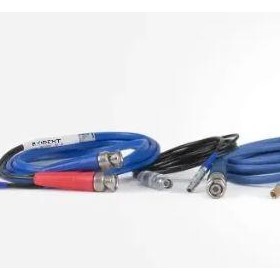
Transducer Cables | Evident Australia
Spot Weld Transducers | Evident Australia
RTD Transducers | Evident Australia
Protected Face Transducers | Evident Australia
Normal Incidence Shear Wave Transducers | Evident Australia
Integral Angle Beam Transducers | Evident Australia
Immersion Special Transducers | Evident Australia
Immersion Transducers | Evident Australia
High-Frequency Transducers | Evident Australia
Electromagnetic Acoustic Transducer (EMAT) Single Element | E110-SB
Delay Line Transducers | Evident Australia
Contact Transducers | Evident Australia
AWS Wedges and Transducers | Evident Australia
I/P & E/P Transducer I Type 550X
T550X Miniature I/P, E/P Transducer
Transducer | ELCC - AC State
Rotational Transducers RT8000 Series
Rotational Transducers RT9000 Series
Test & Measurement / Transducer Vibration Calibration System 8210
Thanks for your help!
Sorry! Unable to submit your request at this time. Please try again later.
Report this product



