
Crane Hire Supplier in Sydney

Join industrial buyers comparing supplier quotes and buying with confidence. Free, quick and easy.

How IndustrySearch works
Tell us what you need
Answer a few quick questions about the equipment you're looking for.
Get personalised quotes
Receive tailored quotes from relevant Australian suppliers.
Compare and choose
Compare quotes, ask questions and choose the best option for you.
 Save time
 Compare quotes
 Buy with confidence
Save time, compare quotes & buy with confidence
Crane Hire Suppliers in Sydney

Francrane is an Crane Hire supplier to Sydney
Francrane specialises in crane hire, moving machinery and equipment, factory relocations and transport and storage solutions. Based in Western Sydney and serving the entire Sydney area, Francrane operates a fleet of cranes, trucks and forklifts and has built an enviable reputation in the woodworking, printing, gas, steel, maritime, paper and machinery fabrication and installation ...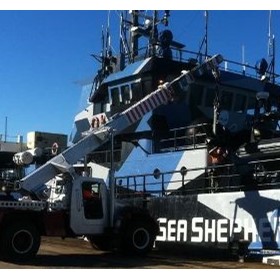

Machinery Transfers & Relocations is an Crane Hire supplier to Sydney
From a humble start-up in 1991 Machinery Transfers & Relocations has had many success stories. In recent times these include: • Dismantling involvement of the 2000 Australian Olympic Village at Homebush • Transport and installation of machinery at IMAX theatre Darling Harbour • Removal of multiple plant room equipment from the Convention Centre at Darling Harbour We have ...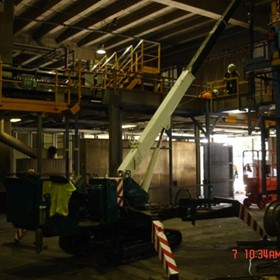

Preston Hire is an Crane Hire supplier to Sydney
Preston Hire has a proud and dynamic history demonstrating our desire to continually evolve and ensure innovation is at the core of what we do. Originally founded in 1969, Preston was a small mobile crane and scaffolding equipment hire business owned and managed by the Preston family. 50 years on, Preston Hire offers a national, multi-branch network across Australia with an ...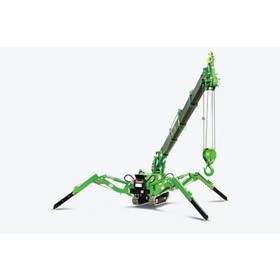

- Mobile crane: A versatile crane that can be easily transported and set up on site. Mobile cranes come in various sizes and configurations, including truck-mounted, rough-terrain, and all-terrain cranes.
- Tower crane: A tall crane that is commonly used in construction sites to lift heavy materials and equipment to high heights. Tower cranes are fixed to the ground and have a long horizontal jib that can rotate 360 degrees.
- Crawler crane: A heavy-duty crane that is mounted on tracks or crawlers, allowing it to move on rough terrain and lift heavy loads over a wide area. Crawler cranes have a high lifting capacity but require a large space to move and set up.
- Overhead crane: A crane that is suspended from a beam or gantry and moves along a track to lift and move heavy loads in a factory or warehouse. Overhead cranes are ideal for repetitive lifting tasks and can handle loads up to several tons.
- Floating crane: A crane that is mounted on a barge or pontoon and used for marine construction, such as building bridges or offshore platforms. Floating cranes are capable of lifting heavy loads over water and can be moved to different locations as needed.
- - Completion of a formal training program or apprenticeship
- - Certification from a recognized organization, such as the National Commission for the Certification of Crane Operators (NCCCO)
- - Knowledge of crane safety regulations and procedures
- - Familiarity with the specific crane they are operating
- - Good communication skills
- - Ability to read and interpret blueprints and diagrams
- Pre-operation inspection: Before the crane is put into operation, it must be thoroughly inspected to ensure that all components are in good working order. This includes checking the brakes, cables, hoist, and booms.
- Operator training: The crane operator must be properly trained and certified to operate the specific type of crane being used. They must also be aware of all safety procedures and protocols.
- Site preparation: The area where the crane will be used must be properly prepared to ensure that it is stable and secure. This may include leveling the ground, securing the crane to the ground, and ensuring that there are no hazards in the area.
- Safety equipment: Safety equipment such as hard hats, safety harnesses, and protective clothing must be worn by all workers on the site.
- Communication: Clear communication must be maintained between the crane operator and other workers on the site to ensure that everyone is aware of the crane's movements and any potential hazards.
- Load limits: The crane must not be overloaded beyond its rated capacity. Load limits must be clearly marked and observed.
- Wind speed: Cranes must not be operated in high winds, as this can cause instability and potentially dangerous situations.
- Emergency procedures: In the event of an emergency, such as a crane collapse or malfunction, there must be clear and well-rehearsed emergency procedures in place to ensure the safety of all workers on the site.
- Identifying the specific requirements: The first step is to identify the specific requirements for the crane, including its lifting capacity, reach, and other features.
- Finding a suitable crane rental company: Once the requirements are known, the next step is to find a suitable crane rental company that can provide the required crane.
- Negotiating the terms: Once a suitable crane rental company is identified, negotiations are conducted to finalize the terms of the rental agreement, including the rental period, rental rate, delivery and pickup schedule, and other details.
- Coordinating the delivery and pickup: Once the rental agreement is finalized, the crane rental company will coordinate the delivery and pickup of the crane, including arranging for transportation, setting up the crane on-site, and providing an operator if required.
- Ensuring safety and compliance: Throughout the process, safety and compliance considerations are paramount, and the crane rental company will ensure that all necessary safety measures are taken to protect workers and equipment.
Crane Hire Costs and Supplier Insights
Why choose a supplier in Sydney for Crane Hire Quotes?
If you are in Sydney and considering purchasing a Crane Hire, it's worth considering Sydney-based suppliers. Doing so offers several benefits that are particularly relevant to businesses in the area. Here are the top reasons why opting for a local Sydney supplier can be the best decision for your Crane Hire buying needs.
Streamlined ComplianceStreamline your compliance efforts by purchasing Crane Hire from Sydney. Local suppliers understand local legal landscapes, making compliance straightforward.
Buying in Sydney and Strengthen Your NetworkStrengthen your local business network by buying Crane Hire in Sydney. Connect with other businesses and foster community ties through local transactions.
Long-Term Service CommitmentRely on a long-term service commitment from Crane Hire suppliers. Their proximity allows for excellent support and partnership.
Eco-Friendly Crane Hire SolutionsReduce your carbon footprint by choosing eco-friendly Crane Hire solutions. Local sourcing cuts down on transport emissions and supports sustainable practices.
Dependability of Sydney Crane Hire ProductsAssure quality and dependability when you buy a Crane Hire. Local suppliers maintain rigorous quality control to meet your expectations.
Secure Your Inventory with Local SuppliersSecure your Crane Hire inventory by partnering with local suppliers in Sydney. Reduce the likelihood of stock shortages and logistical issues.
Buy a Crane Hire Near Me
Crane Hire Articles & Reviews


 Reach valuable industrial buyers in minutes
 Promote key products & content
 Drive cost effective & measurable sales