
Force Sensor in Melbourne

Join industrial buyers comparing supplier quotes and buying with confidence. Free, quick and easy.

How IndustrySearch works
Tell us what you need
Answer a few quick questions about the equipment you're looking for.
Get personalised quotes
Receive tailored quotes from relevant Australian suppliers.
Compare and choose
Compare quotes, ask questions and choose the best option for you.
 Save time
 Compare quotes
 Buy with confidence
Save time, compare quotes & buy with confidence
Force Sensor Suppliers in Melbourne
Programmable logic controllers, conveyor belts, sensors and relays effectively run production on their own. Computers and machines and detectors bring high performance and consistency to the business of making things. So do force sensors. Among other things, force sensors can measure anything from a few grams to a few hundred thousand kilograms and they’ve become integral to all kinds of products and processes as a result.
Force sensors translate any applied mechanical force, particularly tensile and compressive forces, and provide an accurate measurement of that force. Force sensors are used across many industries and applications including manufacturing, logistics, medical devices, musical instruments and automobiles.

Metromatics is an Force Sensor supplier to All
Metromatics Pty Ltd is an Australian-owned engineering and technology company specialising in the design, manufacture, integration and supply of rugged computing, embedded electronics and industrial technology solutions for demanding applications across Australia and New Zealand. Established in 1989, Metromatics provides engineering expertise and complete technology solutions ...Customers: Raytheon Australia, BAE Systems, Boeing Australia, QR, Transgrid, Snowy Hydro, SAAB, ASC


CGB Precision Products is an Force Sensor supplier to Melbourne
CGB Precision Products is a specialist supplier of super precision ball bearings and related components. With the world's best products we have been successfully serving applications in aviation, defence, manufacturing, and medical instrumentation for over 35 years. We are the Australian representatives for top brands such as Barden, FAG, Kaydon & Gamet, Kamatics, Heim, ...
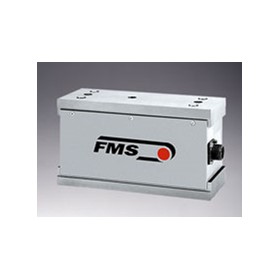

Bestech Australia is an Force Sensor supplier to Melbourne
Bestech Australia is a dynamic and customer-focused leader in technical training, test & measurement, and control & automation solutions. We bridge global technology with local expertise, offering a comprehensive range of high-quality equipment across multiple industries. Our product portfolio includes: • Technical teaching and training equipment for trade education and ...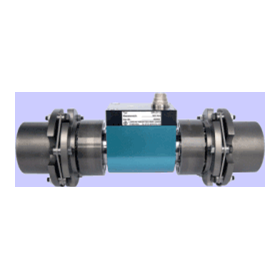
Lorenz Torque Sensors, Force Sensors / Products - By Lorenz & Aikoh

KD39 bending beam force sensor | Me-systeme

MeasureX is an Force Sensor supplier to Melbourne
MeasureX is a fast-growing international provider of pressure, load, level and displacement systems. Based on more than two decades of experience, MeasureX provides a wide range of sensors for hundreds of international clients working in areas as diverse as medical and food industries to automotive and aerospace industries. At MeasureX we believe that all customers seek ...
Miniature S-Type Force Sensor- MLS66

Ultra-Miniature Compression Force Sensor- MLW66

Applied Measurement Australia is an Force Sensor supplier to Melbourne
Since 1976, Applied Measurement Australia has employed a total systems approach to engineered measurement and control applications. Applied Measurement’s product portfolio includes an enviable range of international brands, as well as in-house manufactured product which is both sold locally, and exported. As an engineering company, Applied Measurement designs and manufactures ...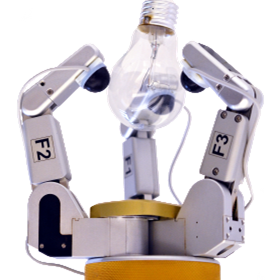

IDM Instruments is an Force Sensor supplier to Melbourne
We are a leading manufacturer & supplier of testing & measuring instruments, providing quality solutions to customers’ manufacturing process & laboratory testing requirements. We supply a vast range of testing equipment to multiple industries. Instruments are used to test different aspects required for quality control & cost reduction of a final product, with reference to ...

- Strain Gauge Sensors: These sensors use a strain gauge to measure the change in resistance when a force is applied to the sensor. They are commonly used in applications where high accuracy is required.
- Load Cells: Load cells are used to measure the weight or force applied to an object. They are commonly used in industrial applications, such as weighing scales or force testing machines.
- Piezoelectric Sensors: These sensors generate an electric charge when pressure or force is applied to them. They are commonly used in applications where a fast response time is required.
- Optical Sensors: These sensors use light to measure the amount of force applied to an object. They are commonly used in applications where high precision is required.
- Capacitive Sensors: These sensors measure the change in capacitance when a force is applied to them. They are commonly used in applications where high sensitivity is required.
- Sensitivity test measures the smallest force that the sensor can detect. Hysteresis test determines the difference in the measured force between the increasing and decreasing force applied. Repeatability test measures the consistency of the readings by applying the same force multiple times. Linearity test measures the deviation of the sensor's output from a straight line when a range of forces is applied.
- The accuracy of force sensors is typically expressed as a percentage of the full-scale measurement range. The accuracy can vary depending on the type of sensor, environmental conditions, and calibration. High-quality sensors can achieve accuracies up to 0.1% of the full-scale range, while lower-quality sensors may have an accuracy of around 1-2% of the full-scale range.
- Range of force: Consider the maximum and minimum force values that your application requires. Choose a sensor that can measure within this range.
- Type of force: Different sensors are designed to measure different types of force, such as compression, tension, or shear. Choose a sensor that is designed to measure the type of force your application requires.
- Environment: Consider the environment in which the sensor will be used, such as temperature, humidity, and vibration. Choose a sensor that is designed to operate in the conditions of your application.
- Accuracy: Consider the level of accuracy required for your application. Choose a sensor that can provide the required level of accuracy.
- Output signal: Choose a sensor that provides an output signal that is compatible with your measurement system. Common output signals include analog voltage, current, or digital signals such as I2C or SPI.
- Size and shape: Consider the size and shape of the sensor, as well as the mounting options available. Choose a sensor that fits your application's requirements.
- The response time of a force sensor can affect the accuracy and precision of measurements in applications that require real-time monitoring and control. For example, in robotics or industrial automation, a fast response time may be critical to ensure timely and accurate feedback for control systems. In other applications, such as force sensing in human-machine interfaces or medical devices, a slower response time may be acceptable.
Frequently Asked Force Sensor Questions
A force sensor responds to an applied force and converts that response into a measurable quantity. Most force sensors are made out of force-sensing resistors, sensing film and electrodes which measure tensile and pressure forces, as well as elastic deformations.
Force sensors can detect forces of just a few grams right through to 100,000 kilograms and more.
A few typical applications are:
- Musical instruments
- Bathroom scales
- Cars to detect occupied seats
- All kinds of medical instruments and appliances
- All kinds of process control applications in manufacturing
The force can be with you in three primary sensing forms: load cells, strain gauge load cells and force-sensing resistors.
Load cells. As a rule, load cells measure compressive forces otherwise known as weight. Load cells call on a wide variety of technology to do this and come in many forms.
- Pneumatic load cells
- Inductive load cells
- Capacitive load cells
- Hydraulic load cells
- Piezoelectric crystal load cells
- Strain gauge load cells are generally used in robotics research and be either single-axis or multi-axis.
- Magnetostrictive load cells
Force sensing resistors are used to tell:
- When a set threshold has been exceeded
- An applied force’s rate of change
- An applied force’s relative change
- Any contact or touch
What force needs to be measured?
- Do you need to measure the weight of components and end products in a production line?
- Is force measurement required in some other industrial application?
- Do you need force sensors to measure axle load in trucks or the load in trailers?
- What about other types of vehicles and transportation? Force sensors can assist with the smoother, safer operation of trains.
- Bridges and cranes anyone? Again, force sensors can play a large part in safety and efficiency.
These are just a few examples of where force sensors can be a driving force and a measured approach to higher performance. And with the wide range of force technology options available, most commercial and industrial needs can be met. However, do remember that a force sensor performing well in one application might perform badly in a situation that seems quite similar. So it pays to do your homework and be very specific about requirements and expectations.
Force sensors with superior specs will cost more. A basic load cell can cost as little as $230. A more technical strain gauge sensor might cost more like $4000. So weigh it up with your own balance of budget versus minimum required output.
A well maintained force sensor is, essentially, an invisible force sensor because it will just go about its business quietly and without fanfare. However, a faulty force sensor can throw your business balance right off kilter, compromising quality, safety and customer loyalty.
So what are the main problems to look out for?
- Incorrect mounting can cause a sensor to give inaccurate readings.
- Condensation causes calibration problems, particularly problematic for factories in the food and beverage industries.
- Electromagnetic interference and hotspots from surrounding circuit boards cause force sensors to malfunction.
- Cybersecurity breaches cause force sensors to malfunction.
Force sensors are integral to the efficient operation of anything from production lines to railway lines. If they get out of kilter, bad things can happen without warning.
Here are a few tips to keep force sensors working as they should.
- Regularly check system alignments and recalibrate if necessary.
- Clean sensors carefully to remove all debris and oil.
- Regularly check for deterioration and corrosion.
- Replace force sensors if the frequency of realignments becomes excessive.
Force Sensor Costs and Supplier Insights
If you are looking to buy a Force Sensor for sale, suppliers on IndustrySearch include Metromatics
Why choose a supplier in Melbourne for Force Sensor Quotes?
If you are in Melbourne and considering purchasing a Force Sensor, it's worth considering Melbourne-based suppliers. Doing so offers several benefits that are particularly relevant to businesses in the area. Here are the top reasons why opting for a local Melbourne supplier can be the best decision for your Force Sensor buying needs.
Dependability of Melbourne Force Sensor ProductsAssure quality and dependability when you buy a Force Sensor. Local suppliers maintain rigorous quality control to meet your expectations.
Melbourne Providers Leading Innovation AdoptionChoose Melbourne Force Sensor providers leading in innovation adoption. They help you implement the latest industry trends swiftly, enhancing your operational capacity.
Streamlined Logistics with Melbourne SuppliersStreamline your Force Sensor logistics. Simplify your supply chain management with local sources.
Benefit from Melbourne Supplier ExpertiseEnhance your Force Sensor's functionality with cutting-edge customisations. Tailored enhancements drive better business outcomes.
Immediate Force Sensor Availability in MelbourneBenefit from immediate Force Sensor availability when you choose suppliers in Melbourne. Quick access to equipment prevents project delays.
On-Site Force Sensor Support and TrainingBenefit from on-site support and training in Melbourne. Having access to immediate help and expertise ensures your team uses the equipment effectively.
Buy a Force Sensor Near Me

 Reach valuable industrial buyers in minutes
 Promote key products & content
 Drive cost effective & measurable sales