
CNC Grinding Machine

Join industrial buyers comparing supplier quotes and buying with confidence. Free, quick and easy.

How IndustrySearch works
Tell us what you need
Answer a few quick questions about the equipment you're looking for.
Get personalised quotes
Receive tailored quotes from relevant Australian suppliers.
Compare and choose
Compare quotes, ask questions and choose the best option for you.
 Save time
 Compare quotes
 Buy with confidence
Save time, compare quotes & buy with confidence
CNC Grinding Machine - Centerless, Universal & Column Suppliers

Asteg Engineering Supplies Pty Ltd has been serving the Australian engineering and manufacturing industries since 1961 from it's Adelaide office in South Australia. Our company specialises in the supply of an extensive range of tooling, measuring equipment and associated products including application specific cutting tools to aerospace, rail, defence, medical, toolmaking and ...
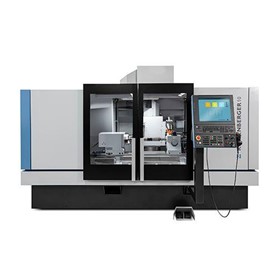

Computer Numerical Control (CNC) has been serving the Machine Tool Industry since 1975. CNC was established at a time when Numerical Controlled Machining was becoming the way of the future. Along with the Hardinge USA agency CNC has maintained itself as an importer of quality CNC Machine Tools. Hardinge has grown from predominately a CNC Lathe Manufacturer to producing a ...
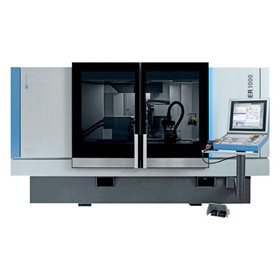
Hardinge Grinding Machine | Kellenberger 1000
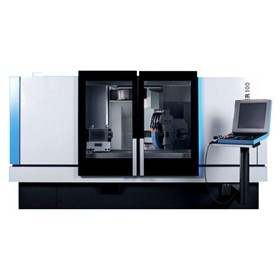
Hardinge Grinding Machine | Kellenberger 100
CNC Grinding Machine Buying Guide
Find and buy grinding machines from verified suppliers on IndustrySearch. Grinding machines remove material from a workpiece through friction with a moving abrasive medium.
Things to consider when buying grinding machines:
- Know your application - Important factors to know before getting started are the type of material you need to grind, the amount of material to be removed, dimensional precision, surface finish, speed and portability requirements.
- The type of grinding machine required - common types are:
- Surface grinders - permanently installed, used for precision grinding. The workpiece is held on a back and forth moving table and the grinding head is slowly lowered as required to produce a precise flat surface.
- Bench grinders - permanently installed, used for manual grinding. Typically incorporating two grinding wheels of different grain sizes, mounted on a double shaft motor that is secured on a workbench, with the operator manually handling the workpiece as required.
- Angle grinders - portable handheld grinders, used for manual grinding. They feature a robust compact design and are ubiquitous throughout the industry for their multitude of uses, eg grinding, cutting, shaping and polishing.
- CNC grinders - permanently installed, extreme precision machines, specialized for mass production with high production speeds while maintaining extremely tight tolerances, in some cases even within 2.5 thousands of a millimetre.
We also have a broad range of grinding machines accessories such as grinding wheels, belts, stones, disks and wire brushes.
Contact our vendors for a free quote or expert advice on grinding machines. Delivery available Australia wide.

- Type of grinding machine: There are different types of grinding machines such as surface grinders, cylindrical grinders, and tool and cutter grinders. The type of machine you choose will depend on the type of work you need to do.
- Size and capacity: The size and capacity of the grinding machine will determine the size of the workpiece it can handle. You should choose a machine that can handle the size of the workpiece you need to grind.
- Power and speed: The power and speed of the grinding machine will determine how fast and efficiently it can grind the workpiece. You should choose a machine with enough power and speed to handle your workpiece.
- Precision and accuracy: The precision and accuracy of the grinding machine will determine the quality of the finished product. You should choose a machine that can deliver the level of precision and accuracy you need.
- Ease of use: The grinding machine should be easy to set up, operate, and maintain. You should choose a machine that is user-friendly and requires minimal maintenance.
- Safety features: The grinding machine should have safety features such as guards, emergency stop buttons, and safety interlocks to prevent accidents and injuries.
- Lubrication: The machine's moving parts need to be lubricated regularly to prevent wear and tear.
- Cleaning: Grinding machines need to be cleaned regularly to remove debris and other contaminants that can affect their performance.
- Inspection: Regular inspections of the machine's components can help identify any issues before they become major problems.
- Replacement of worn parts: Grinding machines have parts that wear out over time, such as belts, bearings, and grinding wheels. These parts need to be replaced as needed to ensure the machine operates at its best.
- Calibration: Grinding machines need to be calibrated regularly to ensure they are operating within the manufacturer's specifications.
CNC Grinding Machine Costs and Supplier Insights
Buy a CNC Grinding Machine Near Me

 Reach valuable industrial buyers in minutes
 Promote key products & content
 Drive cost effective & measurable sales