
Granulator Machine

Join industrial buyers comparing supplier quotes and buying with confidence. Free, quick and easy.




How IndustrySearch works
Tell us what you need
Answer a few quick questions about the equipment you're looking for.
Get personalised quotes
Receive tailored quotes from relevant Australian suppliers.
Compare and choose
Compare quotes, ask questions and choose the best option for you.
 Save time
 Compare quotes
 Buy with confidence
Save time, compare quotes & buy with confidence
Granulator Machine & Plastic Granulator Suppliers
Recycling; it’s a word very much entrenched in our 21st century consciousness, not to mention our conscience. And while large numbers of consumers play their part by putting plastics into recycling bins and placing them by the road for recycling trucks to collect, granulators play an equally important part in making that plastic reusable.
Granulators are (or can be) huge industrial beasts that chop, grind and dice all kinds of plastic items into much smaller chunks of plastic called flakes or regrinds. Those flakes/regrinds can then be recycled as, perhaps, the very item they were before a granulator got at them.
What does that mean for the environment? It means that plastics manufacturers have far less reason to create even more harmful plastics. It means that companies who need plastics to bottle, package or mould new products can rely on a steady supply of endlessly reincarnated plastic.
It means our environment gets some welcome respite from the deluge of non-biodegradable plastic waste.

To provide a complete solution from a single source for the benefit of injection molders and their product: This is the task to which WITTMANN and WITTMANN BATTENFELD have committed themselves. For more than 40 years we have been deeply committed to continuous innovation - day after day - all over the world. More than 2400 employees worldwide are dedicated to your needs. ...

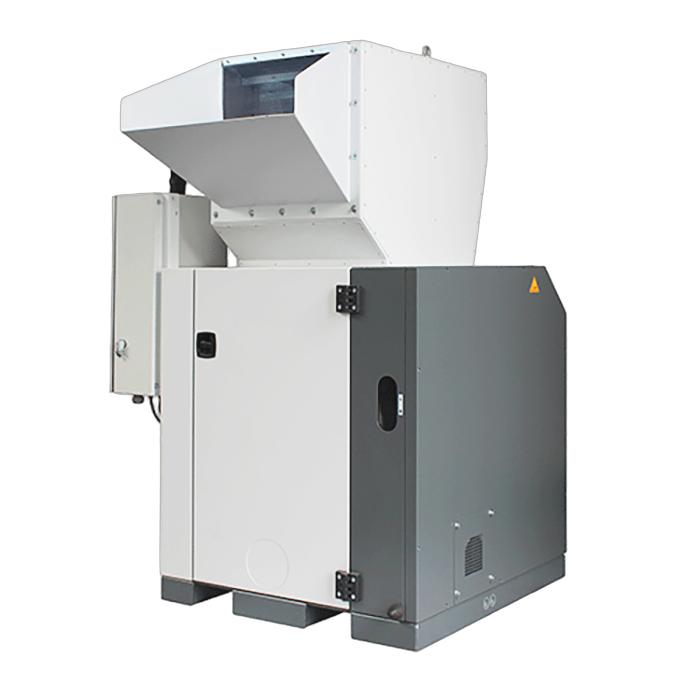
Wittmann Granulator | G- Max 9
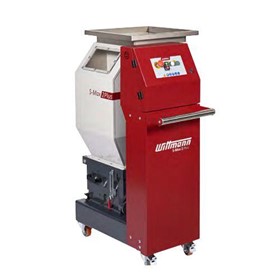
Wittmann Granulator | S-Max Series

- For smaller businesses or those just starting out, a compact or medium-sized granulator machine with a processing capacity of up to 500 kg/hour might be sufficient. These machines are also easier to operate and maintain, and require less power and space.
- These machines are typically more expensive and require more space and power, but they can handle larger volumes of material and produce a higher output rate.
- Plastics: Granulator machines are commonly used in the plastic industry to reduce the size of plastic waste or scrap materials. This includes a variety of plastics such as PVC, HDPE, LDPE, PET, and more.
- Rubber: Granulator machines can also be used to process rubber waste or scrap materials, which can be used in the production of various rubber products.
- Wood: Granulator machines are also used in the woodworking industry to process wood waste or scrap materials, which can be used in the production of particleboard, MDF, and other wood-based products.
- Paper: Granulator machines can also be used to process paper waste or scrap materials, which can be used in the production of recycled paper products.
- Metal: Granulator machines can also be used to process metal waste or scrap materials, which can be melted down and used in the production of new metal products.
- Safety guards: A granulator machine should have safety guards that cover the cutting chamber and prevent operators from coming into contact with the cutting blades. These guards should be sturdy and lockable, and should only be removable for maintenance purposes.
- Emergency stop button: An emergency stop button should be easily accessible and clearly marked. This button should shut off all power to the machine and stop the cutting blades immediately in case of an emergency.
- Safety interlocks: Granulator machines should have safety interlocks that prevent the machine from operating unless all guards and safety devices are in place.
- Overload protection: A granulator machine should have overload protection to prevent damage to the machine and avoid potential hazards. This feature should automatically shut off the machine if it is overloaded or if a foreign object enters the cutting chamber.
- Lockout/tagout system: A lockout/tagout system should be in place to prevent unauthorized access to the machine during maintenance or repair.
- Warning labels: The machine should have warning labels that clearly indicate potential hazards and safety precautions that should be taken.
- There are various financing options available for purchasing a granulator machine. Some manufacturers offer financing options directly, while others work with third-party financing companies. Additionally, some companies may offer leasing options or allow for financing through a business line of credit.
Granulator Machine Costs and Supplier Insights
Buy a Granulator Machine Near Me
Granulator Machine Articles & Reviews



 Reach valuable industrial buyers in minutes
 Promote key products & content
 Drive cost effective & measurable sales