
Dust Monitor in Brisbane

Join industrial buyers comparing supplier quotes and buying with confidence. Free, quick and easy.
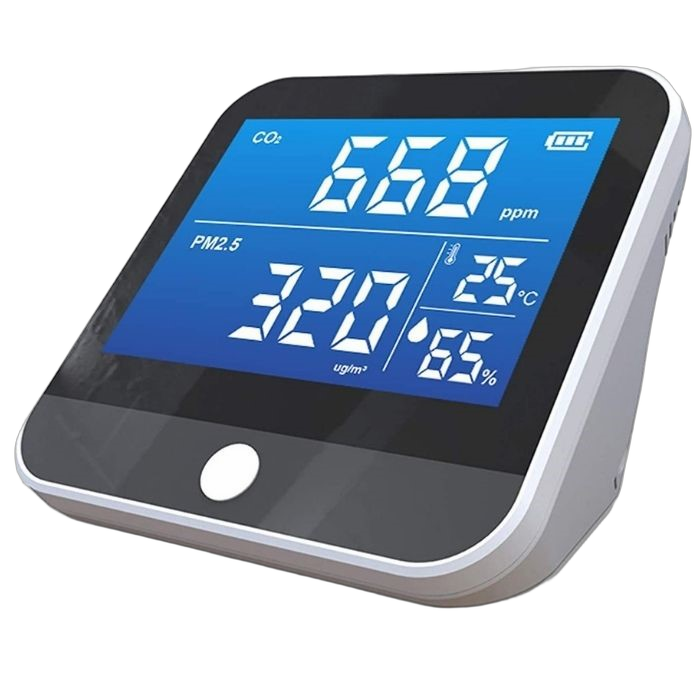
How IndustrySearch works
Tell us what you need
Answer a few quick questions about the equipment you're looking for.
Get personalised quotes
Receive tailored quotes from relevant Australian suppliers.
Compare and choose
Compare quotes, ask questions and choose the best option for you.
 Save time
 Compare quotes
 Buy with confidence
Save time, compare quotes & buy with confidence
Dust Monitor Suppliers in Brisbane

Environdata Weather Stations is an Dust Monitor supplier to Brisbane
Environdata Weather Stations Pty Ltd specialises in the design, manufacture and sales of automatic weather stations and their associated software and hardware. Environdata also supplies and maintains remote communications equipment for these systems, so that a complete environmental monitoring solution can be supplied. Environdata has been operating since 1982 and has built ...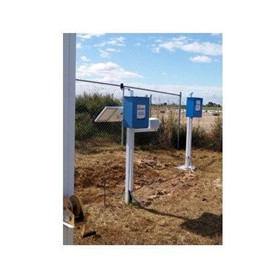

Group Instrumentation is an Dust Monitor supplier to Brisbane
Group Instrumentation was formed in 1997 to satisfy industry requirements for minimal maintenance, in-situ continuous emission monitoring products and systems. Requirements for Continuous Emission Monitoring Systems are increasing each year and for industry the challenge is to select a system that is cost effective and reliable while conforming fully to environmental legislation ...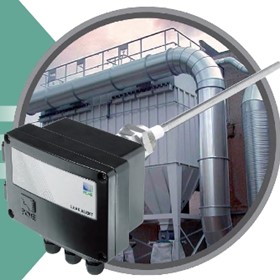
Dust Monitoring | Leak Alert 73
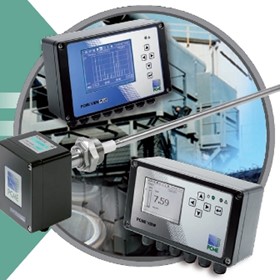
Dust Monitoring | PCME View 370

ECO Environmental is an Dust Monitor supplier to All
ECO Environmental is one of Australia’s largest providers of environmental monitoring equipment and supplies. ECO is proud to have been appointed Australian distributors for a range of nationally and internationally accepted brand names and products across a wide range of disciplines including surface and groundwater monitoring, dust and air monitoring and gas monitoring and ...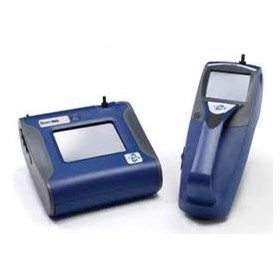

- Real-time dust monitors: These monitors provide continuous measurement of dust concentrations in real-time. They use laser-based technology to detect and quantify the amount of airborne particles.
- Personal dust monitors: These monitors are worn by individuals to measure their exposure to dust in the workplace. They are typically small, lightweight, and portable.
- Indoor air quality monitors: These monitors measure the concentration of dust and other pollutants in indoor environments, such as homes and offices.
- Ambient air quality monitors: These monitors measure the concentration of dust and other pollutants in outdoor environments, such as urban areas and industrial sites.
- Fixed-point dust monitors: These monitors are installed in specific locations to provide continuous monitoring of dust levels in the surrounding environment.
- Dust deposition monitors: These monitors measure the amount of dust that accumulates on surfaces over time, providing an indication of overall dust levels in the area.
- Sensitivity: The sensitivity of a dust monitor determines its ability to detect even the smallest particles of dust in the air. Look for a monitor with high sensitivity to ensure accurate readings.
- Range: The range of a dust monitor refers to the concentration of dust particles it can detect. Choose a monitor with a wide range to ensure it is suitable for your specific monitoring needs.
- Accuracy: The accuracy of a dust monitor is crucial to ensure reliable and consistent readings. Look for a monitor with a high level of accuracy to ensure accurate measurement of dust concentration.
- Portability: If you need to monitor dust levels in different locations, a portable dust monitor is a must. Look for a monitor that is lightweight and easy to transport.
- Data management: A good dust monitor should have a data management system that allows you to store, analyze, and share data. Look for a monitor that comes with software that makes it easy to manage and analyze data.
- Battery life: The battery life of a dust monitor is an important consideration, especially if you need to monitor dust concentrations over an extended period. Look for a monitor with long battery life or one that can be easily recharged.
- Durability: Dust monitors are often used in harsh environments, so it is important to choose a monitor that is built to last. Look for a monitor that is rugged and can withstand exposure to dust, moisture, and other environmental factors.
- Work Health and Safety (WHS) Regulations 2011: These regulations require employers to identify and assess the risks associated with dust exposure in the workplace, and to implement control measures to eliminate or minimise those risks.
- National Pollutant Inventory (NPI) Reporting Requirements: The NPI requires certain industries to report their dust emissions to the government. This includes industries such as mining, quarrying, materials handling, and coal-fired power generation.
- Environmental Protection (Air) Policy 2008: This policy sets out the air quality standards for various pollutants, including dust, in different parts of Australia. It also outlines the monitoring and reporting requirements for industries that emit dust.
- State-specific legislation: Each state and territory in Australia has its own legislation regarding dust monitoring and control. For example, in New South Wales, the Protection of the Environment Operations Act 1997 requires certain industries to obtain an environmental protection licence and comply with specific dust emission limits.
- Calibrate the dust monitor regularly according to the manufacturer's instructions. Calibration ensures that the monitor is reading accurately and consistently.
- Use a zero filter to check the baseline reading of the dust monitor. This should be done before each measurement session.
- Replace the filter at regular intervals. The frequency of replacement depends on the type of filter, the sampling duration and the concentration of particles in the air.
- Keep the dust monitor clean and free from dust or debris. This can be done by wiping it down with a cloth or using compressed air.
- Store the dust monitor in a dry, cool and dust-free environment when not in use.
- Check the battery life regularly and replace the batteries as needed.
- Record and document all maintenance and calibration activities in a logbook to ensure traceability and compliance with regulatory requirements.
Dust Monitor Costs and Supplier Insights
If you are looking to buy a Dust Monitor for sale, suppliers on IndustrySearch include Environdata Weather Stations
Why choose a supplier in Brisbane for Dust Monitor Quotes?
If you are in Brisbane and considering purchasing a Dust Monitor, it's worth considering Brisbane-based suppliers. Doing so offers several benefits that are particularly relevant to businesses in the area. Here are the top reasons why opting for a local Brisbane supplier can be the best decision for your Dust Monitor buying needs.
Continuous Learning with Brisbane SuppliersPromote continuous learning for your Dust Monitor with ongoing training and updates from Brisbane suppliers. Stay ahead with the latest operational knowledge.
Continuous Support for Your Dust MonitorGet continuous support for your Dust Monitor needs from Brisbane's local suppliers. Ongoing help ensures your equipment performs at its best.
Stay Ahead in Dust Monitor TechnologyStay ahead in Dust Monitor technology with the help of local suppliers. They bring the newest advancements directly to your doorstep, keeping you competitive.
Streamlined ComplianceStreamline your compliance efforts by purchasing Dust Monitor from Brisbane. Local suppliers understand local legal landscapes, making compliance straightforward.
Superior Standards with Brisbane ExpertiseBenefit from superior Dust Monitor standards provided by Brisbane suppliers. Their expertise ensures products are built to last and perform exceptionally.
Local Suppliers are the Key to Supply Chain StrengthMake local Dust Monitor suppliers in Brisbane key your supply chain strength. Depend on them for quick replenishments and steady supplies.
Buy a Dust Monitor Near Me
Dust Monitor Articles & Reviews


 Reach valuable industrial buyers in minutes
 Promote key products & content
 Drive cost effective & measurable sales